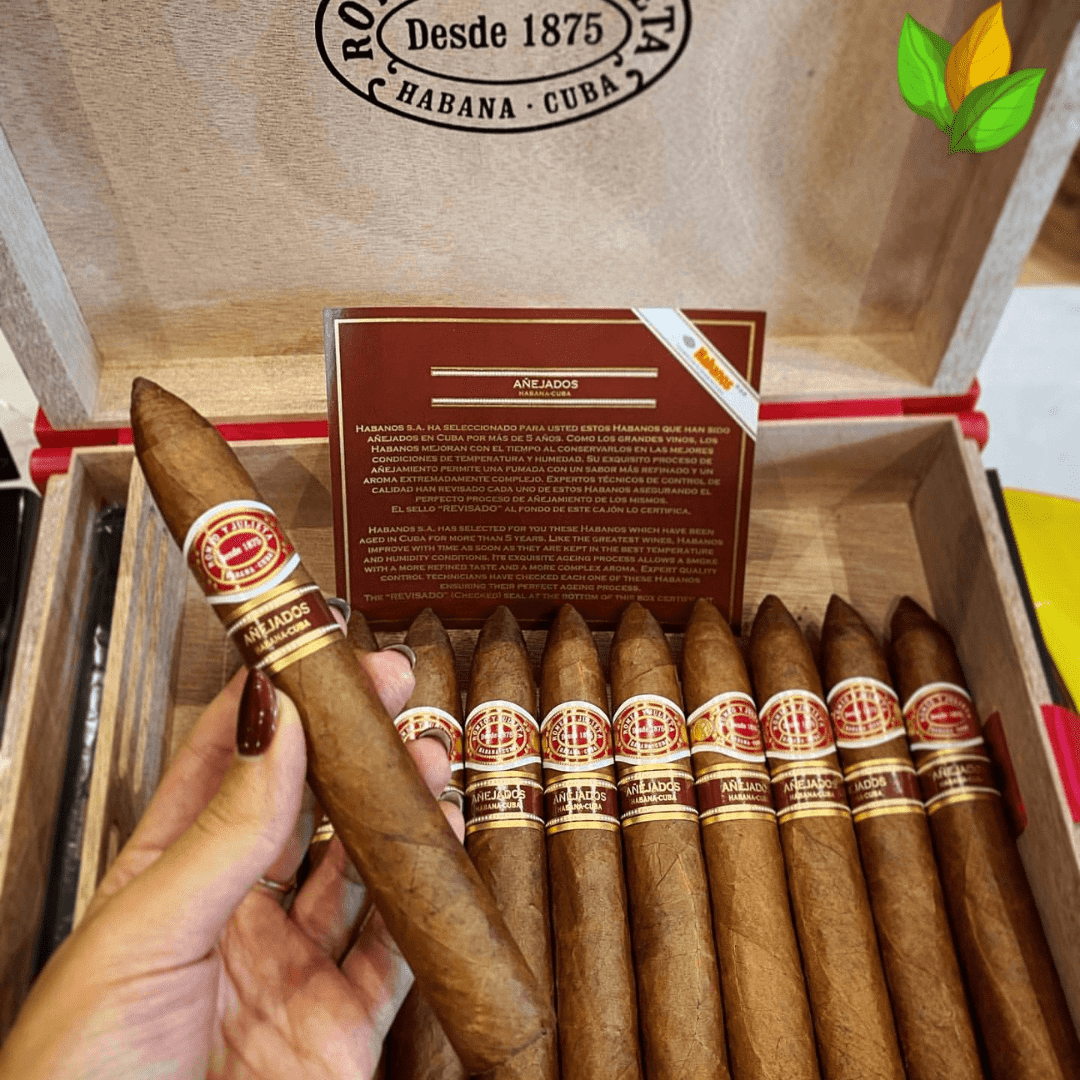
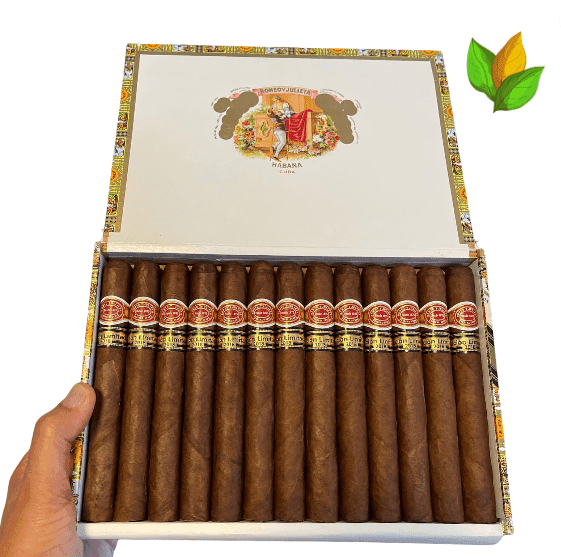
Within the rarefied air of premium tobacco collecting, few artifacts evoke as much nostalgia as the pre-1960 Cuban cigar. Among these historic treasures, the Romeo y Julieta Fabulosos (1) stands out as a monumental figure. It is not merely a smoke, but a tangible connection to an era defined by private ownership, master rollers, and a dedication to leaf that many argue has never been replicated. For the serious connoisseur, finding one of these vitolas is akin to uncovering a lost piece of Havana's golden heritage.

A Product of the Golden Era
To understand the prestige of the Fabulosos (1), one must first contextualize its birth. This cigar was born before the revolutionary government nationalized the tobacco industry, a time often romanticized as the absolute pinnacle of Cuban cigar production. During this epoch, the island's factories operated under a different set of rules, driven by intense competition among brands to produce the most exquisite blends. The Romeo y Julieta of that time was a powerhouse, exporting countless shapes to a global audience eager for Cuban craftsmanship.
The Fabulosos (1) was a casualty of the industry's transformation in the early to mid-1960s. As the Cuban cigar infrastructure shifted post-1960, many traditional sizes were rationalized or eliminated entirely from the catalogs. Consequently, this specific vitola vanished, leaving behind only the examples that were shipped abroad prior to the transition. Its disappearance turned it into a "ghost" of the industry, a shape that represents the final chapter of the pre-revolutionary story.
The Architecture of a Giant
True to its name, which translates roughly to "Fabulous," this cigar was designed to make a statement. It was a handmade creation, relying on the skill of the torcedor rather than the precision of a machine. The dimensions of the Fabulosos (1) suggest it was intended for the serious smoker who had time to spare and a palate ready for complexity.
The physical specifications reveal a substantial smoke, though by modern standards, it offers a certain elegance in its proportions:
- Ring Gauge: 47
- Length: 190 mm (7½ inches)
- Estimated Weight: 15.86 g
- Packaging: Dress boxes of 25
With a length of seven and a half inches, this was a cigar meant for a long evening. A ring gauge of 47 provides a cool burn, allowing the flavors of the wrapper and filler to marry over a prolonged smoking session. It is a format that demands patience, offering a contemplative experience that modern, shorter robustos cannot always replicate. While the specific factory name and band details have been lost to history, the construction quality of this era remains the benchmark against which modern Cubans are measured.
The Ultimate Collector's Prize
Because production ceased so long ago, the Fabulosos (1) has achieved a mythical status in auction houses and private humidors. It is no longer a commodity to be purchased at a local tobacconist; rather, it is an artifact to be hunted. Surviving examples are incredibly scarce, having survived decades of storage, travel, and consumption.
For the collector, the allure is twofold. First, there is the rarity value; a dress box containing 25 of these cigars is a museum-quality find. Second, there is the flavor profile—if aged correctly, these pre-revolutionary tobaccos offer a taste of the terroir that existed before agricultural practices were modernized. The blend represents a snapshot of the soil and seed from a distinct period in the Vuelta Abajo region. While the Romeo y Julieta brand continues to thrive today with other famous vitolas, the Fabulosos (1) remains a lost giant, a silent testament to the brand's storied past and a prize for those lucky enough to encounter it.