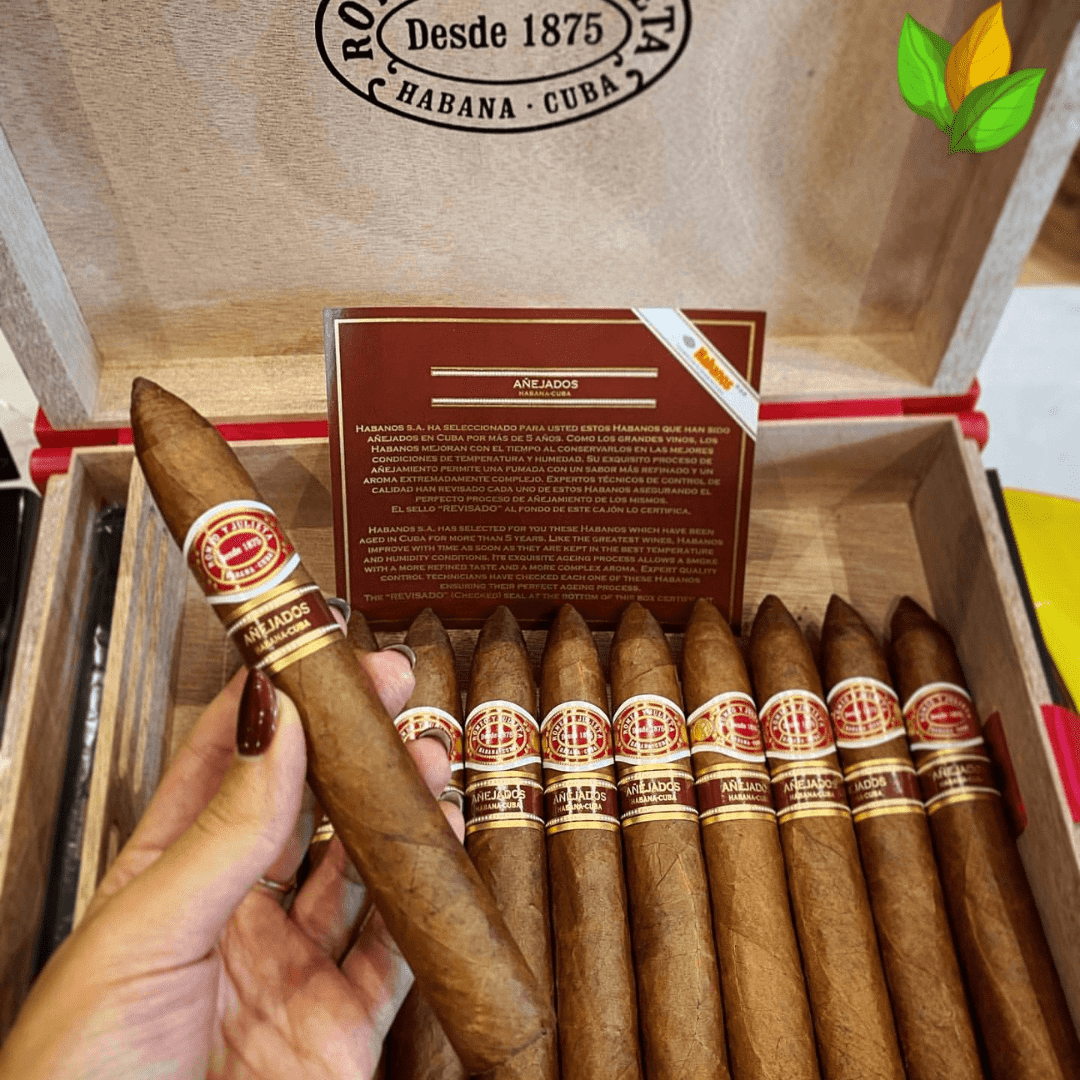
Within the storied annals of Havana's tobacco legacy, few narratives are as bittersweet as the silencing of a classic vitola. The Romeo y Julieta Clemenceaus stands as a prime example of this phenomenon—a distinguished format that once occupied a place of honor in the brand's catalog before eventually fading into history. Paying homage to Georges Clemenceau, the renowned French statesman, this cigar was a testament to an era when size and grandeur were paramount, and its disappearance leaves a void that modern productions struggle to fill.

Origins in a Golden Age
The Clemenceaus boasts a lineage that traces back to a transformative period in Cuban history. Launched prior to the seismic political shifts of 1960, this vitola emerged during what many consider the golden age of Cuban tobacco. Unlike many cigars that were created strictly for export, this format was a staple of regular production, surviving the nationalization of the industry and the transition into the state-run economic model that followed the revolution.
For a span of two to three decades, the Clemenceaus remained a fixture on retailer shelves, bridging the gap between the pre-revolutionary era of privately owned factories and the consolidated industry of the 1970s. Its endurance through these decades speaks to the quality of the blend and the loyalty it commanded among smokers of the time. However, nothing lasts forever, and by the 1980s, production ceased, marking the end of the line for this specific iteration of the Julieta shape.
Anatomy of a Grand Smoke
For the discerning aficionado, the specifications of the Clemenceaus reveal exactly why it was so revered. It was constructed in the Julieta No.2 format, a size that demands patience and offers a generous flavor profile.
- Dimensions: The cigar measured a substantial 178 mm (7 inches) in length with a ring gauge of 47.
- Weight: Each piece carried an official weight of 15.07 grams, ensuring a dense, satisfying draw.
- Band: It featured the early text-centric band design used by Romeo y Julieta, a visual marker that has since become a coveted detail for vintage collectors.
This combination of length and girth placed the Clemenceaus squarely in the category of "grand format" cigars. These dimensions were specifically tailored for the contemplative smoker, offering an extended duration that allowed the complex nuances of the tobacco to evolve significantly from start to finish.
Presentation and Collectibility
In its heyday, the Clemenceaus was presented with a sense of formality befitting its namesake. The cigars were arranged in standard dress boxes of 25, a traditional presentation that prioritized elegance and uniformity. This packaging style was the industry standard for Romeo y Julieta, showcasing the cigars in a way that highlighted their construction and consistency.
Today, the Clemenceaus exists primarily as a collector's item. As a discontinued regular production item with pre-revolutionary roots, surviving boxes have become artifacts of a bygone manufacturing philosophy. Finding a well-preserved example is a rare treat, offering a glimpse into the blending traditions that cemented Romeo y Julieta's global reputation.
The End of an Era
The discontinuation of the Clemenceaus during the 1980s signaled a slow shift in consumer preferences and industry portfolio management. While the reasons for its retirement remain rooted in the complex economics of the Cuban cigar trade, the departure of such a sizeable vitola reflects a time when the market began moving away from extremely long smokes toward slightly more robust or shorter formats.
Nevertheless, the legacy of the Clemenceaus endures. It serves as a benchmark for what a classic Cuban cigar should represent: history, elegance, and a smoking experience defined by time and tradition. For those lucky enough to encounter one, it is more than a smoke; it is a tangible connection to the statesmen and connoisseurs of the past.