Among the limited‑production vitolas that have survived from Havana’s golden age, the Romeo y Julieta Arbolados occupies a unique niche. Its brief tenure on the market and its unconventional packaging make it a coveted piece for collectors who value both the artistry of a hand‑rolled cigar and the story it tells about a bygone era of Cuban tobacco culture.

Roots in the Pre‑Revolutionary Period
The Arbolados debuted before the political upheaval of 1959, placing it squarely in the pre‑revolutionary chapter of Cuban cigar manufacturing. During those years, Havana’s factories were renowned for their relentless pursuit of quality, experimentation with shapes, and sophisticated branding strategies. The Arbolados emerged as a testament to that spirit, offering smokers a medium‑ring, modestly sized smoke that could be enjoyed leisurely. By the end of the 1960s, production ceased, and the model was officially retired in the 1970s, leaving behind only a handful of sealed humidors that have since become time‑capsules of Cuban heritage.
Key Technical Details
Understanding the Arbolados begins with its physical characteristics, which were carefully recorded in the brand’s archival ledgers:
- Cigar Name: Arbolados
- Factory Origin: Unrecorded (the exact Havana workshop remains a mystery)
- Ring Gauge: 42
- Length: 142 mm (approximately 5 ⅝ inches)
- Official Weight: 8.51 g
- Construction: Entirely handmade by skilled torcedores
- Status: Discontinued (production ceased in the 1970s)
These specifications outline a classic parejo format that balanced portability with a substantial smoking time, making it an attractive option for both casual smokers and connoisseurs seeking a moderate‑sized experience.
Design, Banding, and Packaging
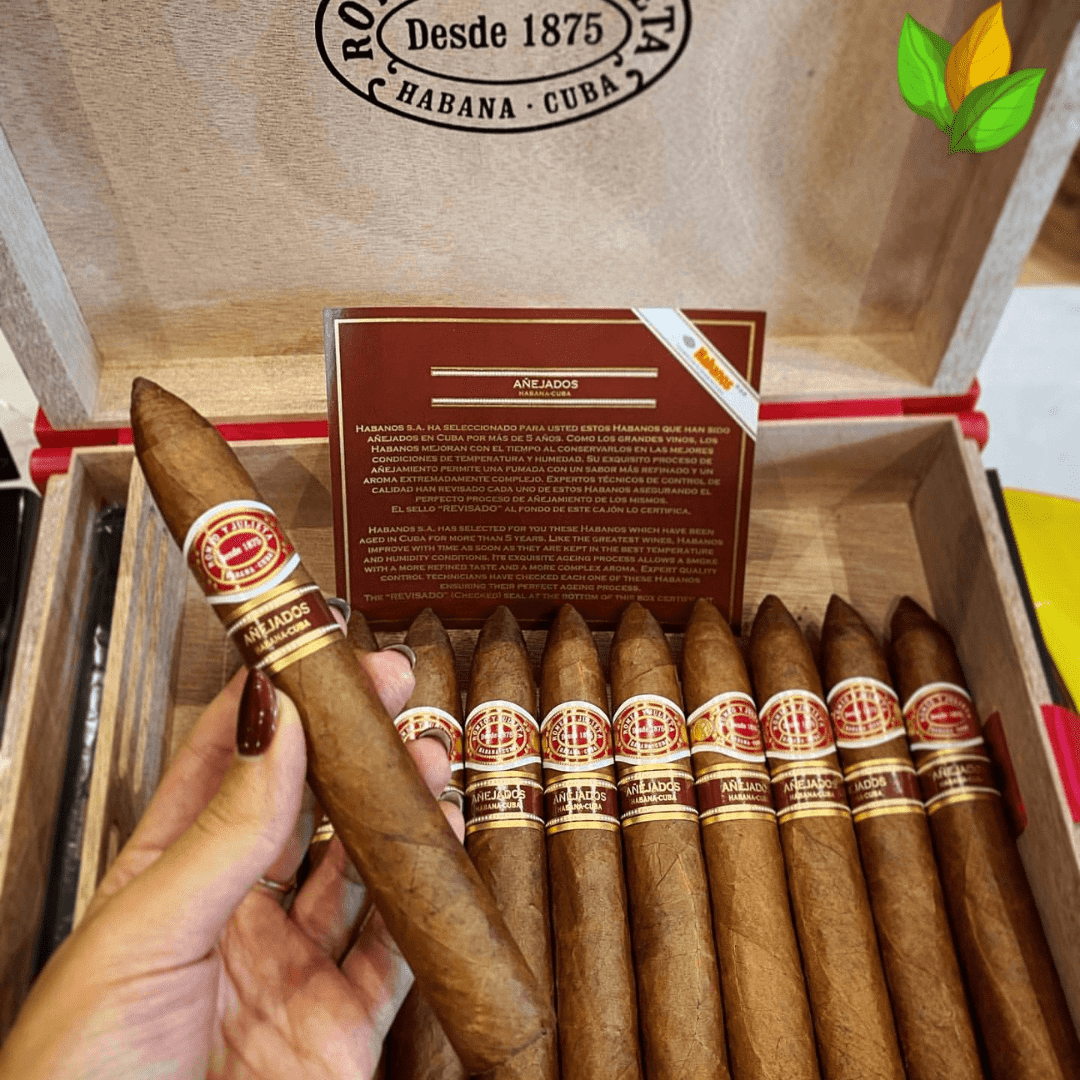
The visual identity of the Arbolados reflects the brand’s early aesthetic. The cigar bears the original Type A band, a design that has become synonymous with Romeo y Julieta’s heritage. The band’s clean lines and understated elegance signal the maker’s confidence in the product’s quality.
What truly sets this vitola apart, however, is its presentation. The Arbolados were nestled inside a distinctive tree‑branch humidor, a wooden container that mirrored the natural motif of the cigar’s name—arbolados translates to “tree‑like” or “wooded.” Each humidor held 25 cigars, arranged in a manner reminiscent of branches sprouting from a trunk. This innovative packaging not only protected the cigars but also turned the humidor itself into a decorative object, ideal for gifting or display.
Why Collectors Prize the Arbolados
The combination of historical timing, scarcity, and unique packaging makes the Arbolados especially attractive to serious collectors. Here are the primary reasons why this discontinued vitola commands attention:
- Historical Significance: Its pre‑1960 debut places it among the last cigars produced before the Cuban Revolution reshaped the tobacco industry.
- Rarity: With production lasting only a couple of decades and no subsequent reissues, sealed examples are hard to locate.
- Distinctive Presentation: The tree‑branch humidor is a rare sight, turning each surviving unit into a dual‑purpose artifact.
- Authentic Banding: The early Type A band links the cigar directly to Romeo y Julieta’s classic branding, a detail prized by purists.
On the secondary market, a well‑preserved humidor containing 25 Arbolados can fetch a premium, especially if the cigars have remained in optimal condition. For many enthusiasts, acquiring an Arbolados is not merely about smoking a historic cigar; it is about owning a tangible piece of Cuban cultural legacy.