Among the treasured relics of Cuba's storied tobacco heritage lies a unassuming vitola that once graced the humidors of everyday smokers and connoisseurs alike. The Por Larrañaga Symbols represents a remarkable intersection of accessibility and tradition, embodying an era when Cuban cigar makers balanced mass production with unwavering craftsmanship. Though decades have passed since this particular size vanished from store shelves, it continues to captivate collectors who seek tangible connections to the island's pre-revolutionary golden age of premium tobacco.

Origins and Historical Context
Por Larrañaga emerged as one of Cuba's venerable names in premium cigars, establishing itself among the select group of manufacturers that maintained continuous operations through the turbulent chapters of Cuban history. The Symbols made its first appearance well before 1960, arriving during a flourishing period when Cuban tobacco reigned supreme on the global stage. This epoch witnessed remarkable creativity and diversity in vitola offerings, as manufacturers competed to serve an insatiable international appetite for authentic Habanos.
The brand carved out a distinctive niche during these formative years, producing smokes that delivered respectable quality without requiring the financial outlay demanded by more prestigious labels. This philosophy of inclusive excellence resonated with a wide spectrum of enthusiasts, from working-class locals to foreign visitors seeking authentic Cuban experiences. The Symbols fit seamlessly within this approach, offering a standardized format that prioritized consistency and enjoyment over ostentatious presentation.
Technical Specifications
The technical profile of the Symbols reflects the practical considerations that guided mid-century Cuban production philosophy. Measuring 129 millimeters in length with a 40-ring gauge, this parejo format struck a balance between smoking duration and portability that appealed to busy professionals and casual consumers. The official weight of 7.04 grams positioned the cigar within a comfortable range for extended smoking sessions while maintaining the structural integrity necessary for machine production methods.
- Manufacturing Method: Machine-made construction
- Dimensions: 129 mm × 40 ring
- Weight: 7.04 grams
- Band Designation: Standard band A
- Packaging Format: Dress box containing 25 units
- Market Status: Discontinued during the 1970s
Production Philosophy and Presentation
Machine fabrication dominated much of Por Larrañaga's output during the mid-twentieth century, representing an industrial evolution that allowed manufacturers to meet escalating demand without sacrificing basic quality standards. The technology available during this period enabled producers to create remarkably uniform smokes that performed reliably session after session. This consistency proved invaluable for building enduring consumer confidence and establishing the brand's reputation for dependable performance.
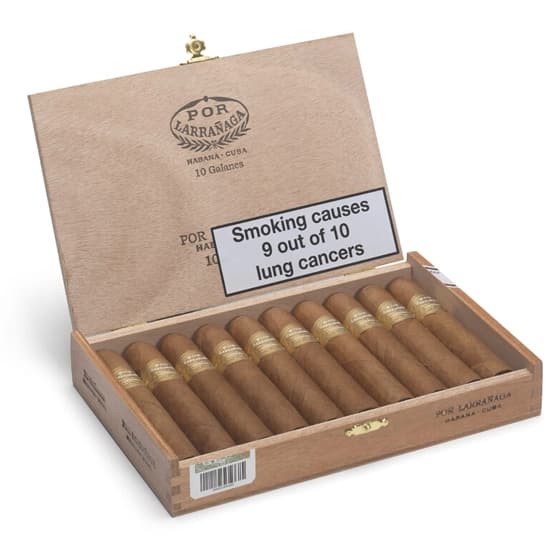
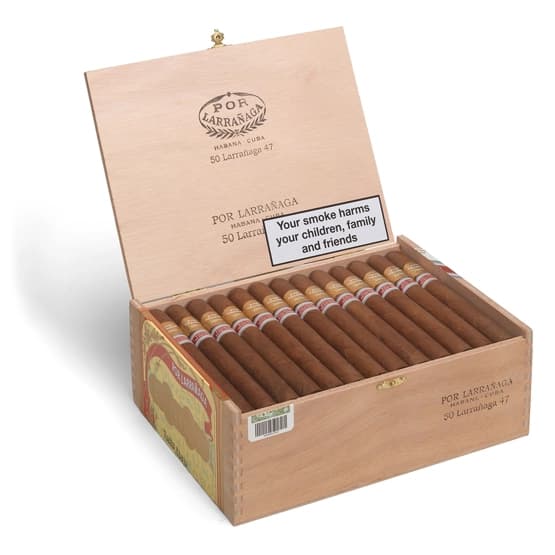
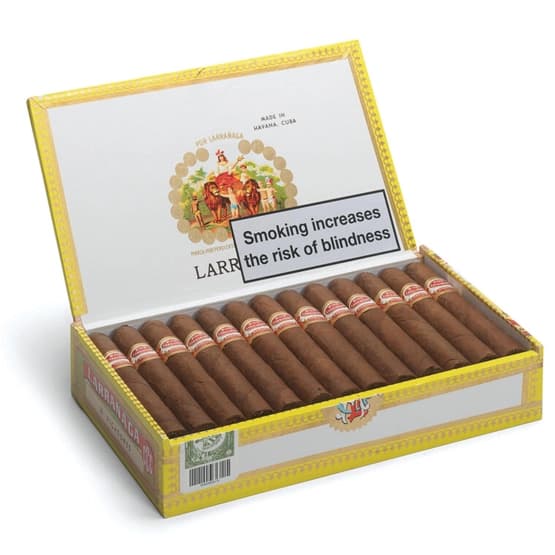
Adorned with the characteristic band bearing the Por Larrañaga insignia, the Symbols carried unmistakable identification that signaled authenticity to discerning purchasers. The traditional dress box presentation, containing twenty-five individual cigars arranged in meticulous fashion, served both practical storage purposes and aesthetic considerations. This configuration facilitated efficient distribution through the established channels that connected Cuban factories with eager markets worldwide, ensuring the Symbols reached consumers across diverse geographical settings.
Legacy and Collectible Appeal
The elimination of the Symbols during the 1970s mirrored broader transformations reshaping Cuba's tobacco sector as administrators consolidated product lines and redirected resources toward prioritized releases. Countless established formats succumbed to this rationalization, disappearing from official catalogs and leaving behind only memories and physical specimens for future generations to discover. These discontinued vitolae now occupy peculiar positions within the collector ecosystem, valued not merely for smoking potential but as artifacts illuminating historical manufacturing practices.
Surviving examples of the Por Larrañaga Symbols have acquired considerable significance among enthusiasts who appreciate their connection to a vanished chapter of Cuban cigar culture. These specimens offer glimpses into production techniques and aesthetic sensibilities that no longer exist, providing tangible touchstones for understanding how premium tobacco products functioned within earlier economic and social contexts. Whether preserved for historical research, future appreciation, or occasional ceremonial consumption, the Symbols endures as a testament to an era when accessibility and quality coexisted within the same carefully crafted package.