Among the most elusive treasures in the world of vintage Cuban cigars, few carry the mystique of the Por Larrañaga Petit Lanceros. This diminutive yet significant vitola serves as a bridge between two distinct eras in Cuba's tobacco history, having been born before the revolution yet persisting through the profound transformations that reshaped the island nation. For serious collectors and connoisseurs of Havana's golden age, securing a box represents the culmination of years of patient hunting through specialized auctions and private sales.

A Brand With Deep Roots in Cuban Heritage
When discussing the Petit Lanceros, one must first appreciate the storied lineage of its parent brand. Por Larrañaga first registered its name in 1834, establishing what would become one of the oldest continuously operating cigar trademarks in all of Cuba. The brand earned a reputation for consistent quality and distinctive blends that appealed to discerning palates across Europe and the Americas. Throughout the nineteenth and early twentieth centuries, Por Larrañaga built a loyal following that included statesmen, artists, and captains of industry.
The decision to introduce the Petit Lanceros before 1960 reflected the brand's understanding of evolving consumer preferences. Cigar aficionados of the period increasingly sought formats that delivered a complete flavor experience without demanding excessive time commitments. The result was a carefully proportioned cigar that maintained the brand's signature character while accommodating modern lifestyles.
Technical Specifications and Dimensions
The Petit Lanceros carries the factory designation "Marevas," a classification that places it squarely within the traditional Corona family of formats. Understanding its measurements provides insight into why this particular size gained favor among knowledgeable smokers:
- Ring Gauge: 42, delivering a moderate draw and even burn progression
- Length: 129 millimeters (approximately 5⅛ inches), ideal for a thirty to forty-five minute smoking session
- Official Weight: 8.46 grams, reflecting the dense, careful packing achieved by skilled rollers
- Construction: Entirely hand-rolled using traditional Cuban techniques passed through generations
These dimensions place the cigar in what many consider the sweet spot of Cuban vitolas. The 42 ring gauge allows sufficient filler tobacco to create complexity, while the length ensures the blend develops fully from first puff to final inch. The weight specification speaks to the artisanal nature of production, as each cigar needed to meet exacting standards before entering commerce.
Surviving Revolution and Market Evolution
What makes the Petit Lanceros particularly significant from a historical perspective is its remarkable journey through Cuba's most turbulent decades. Introduced during the final years of the pre-revolutionary period, this vitola witnessed the dramatic nationalization of the Cuban cigar industry following Fidel Castro's rise to power in 1959. Rather than disappearing amid the chaos of transition, the Petit Lanceros continued production, demonstrating the new regime's recognition of the brand's commercial value and international prestige.
For approximately two decades after the revolution, rollers continued crafting the Petit Lanceros using many of the same techniques and tobaccos that had defined pre-1960 production. This continuity offers collectors a rare opportunity to taste a format that bridges two distinct periods in Cuban cigar history. The eventual discontinuation during the 1980s marked the end of an era, as economic pressures and changing export strategies prompted consolidation across numerous heritage brands.
Packaging and Presentation Standards
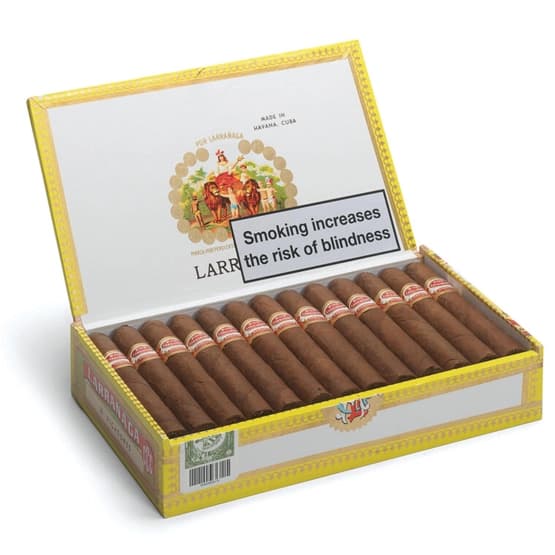
The Petit Lanceros reached consumers through traditional dress boxes containing twenty-five cigars each. This presentation format served multiple purposes beyond mere storage. The distinctive dress box design, with its elegant typography and brand imagery, functioned as both retail display and collector's vessel. For gift-giving occasions, the format provided an impressive presentation that reflected the premium positioning of the Por Larrañaga name. Collectors today prize not only the cigars themselves but also surviving boxes, which often reveal fascinating details about distribution patterns and regional variations in packaging.
The Modern Collector's Pursuit
Today, finding authentic examples of the Petit Lanceros requires dedication, expertise, and considerable financial resources. As a discontinued regular production item rather than a limited edition release, the Petit Lanceros was never intended to become a collector's prize. Yet the passage of decades has transformed these once-common cigars into highly sought artifacts. Each surviving specimen represents a tangible connection to Cuba's pre-revolutionary heritage and the transitional years that followed.
For those fortunate enough to encounter well-preserved examples, the smoking experience offers more than flavor alone. It provides a sensory journey through history, connecting the modern enthusiast with the hands that rolled each cigar and the era that produced them. The Petit Larrañaga Petit Lanceros thus endures not merely as a collectible, but as a testament to the enduring artistry of Cuban tobacco cultivation and cigar craftsmanship.