For the discerning aficionado, few pursuits are as rewarding as unearthing a relic from the golden age of Cuban tobacco. The Por Larrañaga Montecarlos (1) stands as a monolithic tribute to this bygone era, representing a lineage that predates the sweeping changes of the Cuban Revolution. While many modern smokers chase the latest limited releases, true connoisseurs understand that the soul of Habanos often rests in these discontinued, historic formats. This specific cigar is not merely a smoking instrument; it is a tangible connection to a time when production methods and tobacco blends painted a different picture of the island's output.

Origins of a Pre-Revolution Icon
The story of the Montecarlos (1) begins in an era that predates 1960, firmly placing its creation in the pre-revolutionary landscape of Cuban industry. During this period, the Por Larrañaga factory was churning out some of the most recognizable and respected smokes on the global market. This particular vitola served as a workhorse within the brand's portfolio for decades, building a reputation based on the distinct flavor profile associated with the marca.
However, all things must eventually pass. After serving enthusiasts for the better part of a century, production of this specific model ceased around the year 2002. Its departure from the catalog was not a quiet affair; it marked a significant turning point. The discontinuation of the Montecarlos (1) cleared the path for its successor, the Montecarlos (2). This swap was more than a simple model update; it signaled a philosophical shift in how the brand approached this specific size, moving away from the old guard and toward a new standard of production.
Construction and the Machine-Made Era
One of the most defining characteristics of the Montecarlos (1) lies in its engineering. In a modern market that often equates "hand-rolled" with high quality, this cigar stands as a fascinating counterpoint. It was constructed using machine-made methods, a common practice for its time that allowed for greater consistency and volume in distribution. This manufacturing choice provides a unique smoking experience that differs texturally from the hand-finished cigars of today.
The transition to the Montecarlos (2) was largely defined by a move toward handmade construction, rendering the original machine-made variant a distinct artifact of industrial history. Despite the mechanized assembly, the cigar retained the visual identity of the brand. It was adorned with the Standard band A, ensuring that it sat comfortably alongside its stablemates on retailer shelves, maintaining the visual continuity expected by loyal customers of the era.
Technical Specifications and Presentation
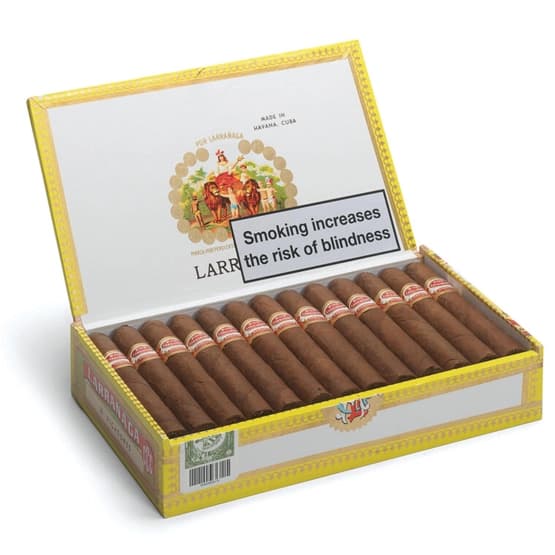
The physical attributes of the Montecarlos (1) reveal a classic format that favors length and elegance over girth. It is a slender cigar, designed for a specific type of prolonged, flavorful smoke. Collectors looking to identify authentic boxes will note the dress box presentation, a hallmark of premium Cuban packaging.
- Factory Name: Deliciosos (old designation)
- Dimensions: A length of 159 mm (6¼ inches) paired with a ring gauge of 35.
- Official Weight: 6.67 grams per unit.
- Packaging: Presented in dress boxes containing 25 units.
Regarding preservation, the cigars were originally shipped with options for retailers. Some boxes contained cigars individually swathed in cellophane for protection, while others were packaged without this barrier. This variation in presentation offers an additional layer of nuance for collectors attempting to verify the provenance of specific boxes found in the wild today.
Legacy and Modern Collectibility
In the current landscape of fine tobacco, the Por Larrañaga Montecarlos (1) has transitioned from a consumer product to a collector's prize. Finding a stockpile of these cigars is a rare occurrence, as the remaining inventory is highly sought after by those who value the historical context of pre-2002 Cuban manufacturing. The shift from this machine-made model to the handmade Montecarlos (2) mirrors a broader trend in the industry's history—a move away from mechanized efficiency toward the artisanal "totalmente a mano" prestige that defines modern Habanos.
For the historian and the smoker alike, the Montecarlos (1) offers a window into the past. It serves as a reminder of a different production philosophy and a flavor profile that has largely been relegated to memory. Owning a box is not just about possessing tobacco; it is about holding a piece of the pre-revolutionary and post-revolutionary timeline that shaped Cuba's most famous export.