Few Cuban cigars carry the historical weight of the Por Larrañaga Lonsdales, avitola that disappeared from humidors worldwide in 2001 after decades of devoted following. This elegant smoke represented more than just tobacco and craftsmanship—it embodied a direct link to Cuban cigar-making traditions that predated the turbulent changes of the 20th century. For collectors and connoisseurs today, finding a well-preserved specimen offers a tangible journey back to an era when hand-rolled excellence defined the island's most prized export.

A Brand Born in the 19th Century
The Por Larrañaga marque traces its founding to 1834, making it one of the oldest continuous Cuban cigar brands still recognized by enthusiasts. Unlike many producers that emerged and faded over the decades, this house maintained its reputation for consistency and quality through wars, revolutions, and economic upheaval. The brand survived Cuba's nationalization of the tobacco industry in the 1960s, continuing production under state control while retaining much of its traditional rolling techniques.
The Lonsdales variant became a flagship expression for this historic marque, representing the quintessential "gentleman's cigar" with its refined dimensions and measured smoking duration. This particular size category allegedly derives its name from Hugh Grosvenor, the first Duke of Westminster, though historians continue to debate the precise origins of this nomenclature. What remains undisputed is that the Lonsdale format achieved iconic status among smokers seeking sophistication over power.
Technical Specifications
Manufacturing occurred at the renowned Cervantes facility, one of Cuba's most storied cigar factories located in the heart of Havana's historic district. The Lonsdales measured precisely 165 millimeters—approximately six and a half inches—with a 42-ring gauge that strikes a balance between concentration of flavor and ease of draw. Each stick weighed an official 10.80 grams, a weight that accounts for the optimal tobacco density for this particular vitola.
The construction was entirely handmade, following procedures passed down through generations of torcedors who perfected their skills over years of apprenticeship. A standard band marked with the letter "A" identified authentic production, allowing collectors to verify genuine examples from later period counterfeits. The filler, binder, and wrapper leaves were carefully selected from premium Vuelta Abajo tobacco farms, ensuring the characteristic medium-bodied profile that distinguished Por Larrañaga releases.
Presentation Options
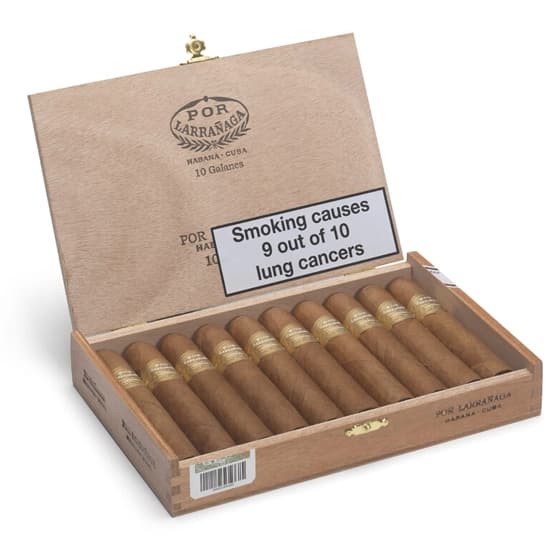
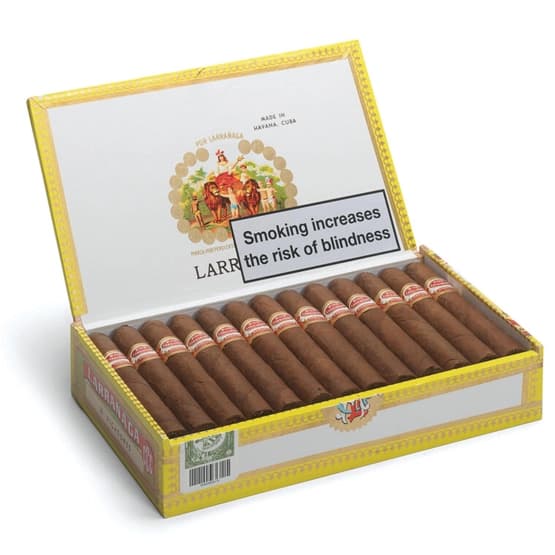
During its production run, the Por Larrañaga Lonsdales reached consumers through two distinct packaging formats. The dress box contained 25 individual cigars, presented in a traditional hinged lid configuration that became synonymous with premium Cuban releases. This option appealed to regular smokers who appreciated having a modest supply of aged tobacco on hand.
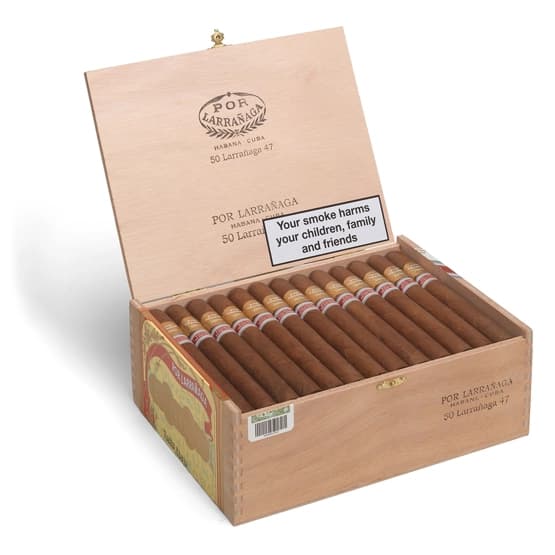
For serious collectors and merchants, the slide lid cabinet box offered larger quantities—50 cigars per container—allowing for extended aging potential and bulk purchasing. Both formats featured identical internal humidification systems through the Spanish cedar lining familiar to any serious cigar storage setup. These presentation choices reflected the dual nature of the Lonsdales as both a daily smoke for some enthusiasts and a collectible treasure for others.
Discontinuation and Modern Legacy
When Por Larrañaga announced the Lonsdales discontinuation in 2001, it marked the conclusion of nearly a century and a half of continuous production. The decision reflected shifting market demands toward smaller, more accessible vitolas and the gradual consolidation of Cuban cigar production under Habanos S.A. management. Despite the end of official manufacturing, the cigar's reputation continued growing among those who remembered its distinctive character.
Remaining boxes command significant premiums on the secondary market, with prices climbing steadily as genuine stock diminishes. Well-preserved examples in proper storage conditions represent increasingly rare opportunities to experience authentic pre-21st century Cuban craftsmanship. Related regional releases, such as the Edición Regional Alemania produced for the German market, offer similar flavor profiles though they cannot fully replicate the original experience.
For collectors pursuing this discontinued treasure, authentication becomes paramount given the proliferation of counterfeit Cuban cigars. Examining band placement, box codes, and construction details helps distinguish genuine articles from clever reproductions. Yet beyond financial value, the Por Larrañaga Lonsdales endures as a symbol of Cuban cigar heritage—a reminder that some traditions, once ended, leave permanent gaps in the world of premium tobacco.