
For enthusiasts who demand a reliable, take-anywhere source on Havana’s storied cigars, a compact reference can be a game‑changer. This guide, authored by Richard B. Perelman and released under the Perelman, Pioneer & Company imprint, distills decades of data into a pocket‑sized format that fits comfortably in a jacket pocket or travel bag. Whether you’re a seasoned collector tracking limited releases or a newcomer eager to learn the landscape of Cuban tobacco, the work offers a factual snapshot of the island’s cigar output through the early 2000s.
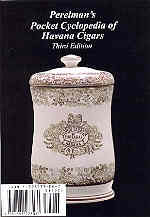
Publication History and Edition Evolution
The series appeared in three distinct releases, each expanding in depth and page count. The inaugural edition hit shelves in 1996, though the cover displayed a 1997 date; it comprised 108 pages of concise entries. A much richer second edition followed in 1998, swelling to 164 pages and offering more extensive listings. The final volume arrived in 2005, reaching 186 pages and providing the most comprehensive snapshot up to that point. Alongside these, a companion title focused on non‑Cuban cigars ran annually from 1995 through 2011, giving readers a broader tobacco reference.
Physical Design and Portability
True to its name, each edition is engineered for mobility. The dimensions are roughly 153 mm by 106 mm, matching the A6 paper size, which allows the book to slide into a coat pocket or a small bag without bulk. The soft‑cover binding is lightweight, while selected colour plates give a visual cue for key vitolas. This practical design makes the guide an ideal companion during shop visits or cigar‑related travels.
Organizational Structure
All three editions share a uniform layout, beginning with a brief introduction and then dividing content into six thematic sections:
- Cuba, Cohiba and Tobacco – Background on the island’s history and its signature leaf.
- From Farm to Factory – The journey of tobacco from field cultivation to final rolling.
- Havana Brands and Sizes – Detailed catalogue of available vitolas and brand offerings.
- Havana Brand History – Narratives behind iconic marque names.
- Smoking & Storing – Practical advice for maintaining cigars in optimal condition.
- References – Source documentation for further study.
Reference‑Only Approach and Listing Categories
The work is deliberately scoped as a data repository rather than a tasting guide. It does not assign scores or flavor notes; instead, it compiles factual information for researchers and collectors. Within the brand and size sections, cigars are grouped into four distinct categories:
- Current production handmade cigars
- Discontinued handmade cigars
- Current production machine‑made cigars
- Discontinued machine‑made cigars
Both active and retired brands appear, with special limited releases noted within each brand entry. The first two volumes also employ a dual naming convention, referencing cigars by their commercial market names as well as their factory vitola designations—a useful tool for deciphering catalog codes.
Value and Limitations for Modern Collectors
Because the guide stops its coverage in the mid‑2000s, it does not reflect the latest developments in Cuban cigar production, such as recent vintage releases or evolving export regulations. However, its meticulous documentation of historic выпусков and discontinued lines makes it an indispensable reference for tracing the lineage of classic Havana marques. Collectors who need rapid access to production data, size specifications, and release histories will find the compact format especially handy. For those seeking tasting notes or contemporary market analysis, supplemental sources would be required.