Among the pantheon of legendary Cuban brands, Partagás holds a distinguished position, renowned for delivering robust, earthy profiles that have captivated smokers for generations. While many enthusiasts are familiar with the brand's current robustos and churchills, there exists a fascinating, quieter chapter in its history involving a diminutive vitola known as the Partagás Senoritas. This small cigar serves as a historical marker, representing a specific era of production where compact formats were an integral part of a smoker's daily ritual, offering a snapshot of the industry’s landscape during the mid-20th century.

Historical Timeline and Market Position
The story of the Senoritas is firmly rooted in the "pre-Revolution" era, a designation that immediately piques the interest of serious collectors. This cigar was introduced to the market prior to 1960, placing it within the golden age of Cuban tobacco production. It survived the dramatic shifts in the industry that occurred during the 1960s, maintaining a presence on shelves during a time of immense transition for the island's tobacco economy.
However, the lifespan of this specific vitola was relatively finite. By the 1970s, the Partagás Senoritas quietly exited production, making it a fleeting entry in the brand's extensive catalog. Its discontinuation means that finding a genuine example today is a rare occurrence, turning these small sticks into sought-after artifacts for those dedicated to preserving cigar history.
Key Historical Facts:
- Production Era: The cigar was available before 1960 and remained in rotation through the following decade.
- Discontinuation: Production ceased permanently during the 1970s.
- Rarity: Existing units are viewed primarily as collectibles rather than consumable stock due to their age.
Technical Specifications and Dimensions
In terms of physical attributes, the Senoritas was defined by its slender and compact geometry. The cigar measures 109 millimeters in length, roughly translating to 4 and a quarter inches, and features a remarkably narrow ring gauge of 20. This places the cigar firmly in the "petit corona" family, though by modern standards, such a thin gauge is a rarity often reserved for very specific niche releases.
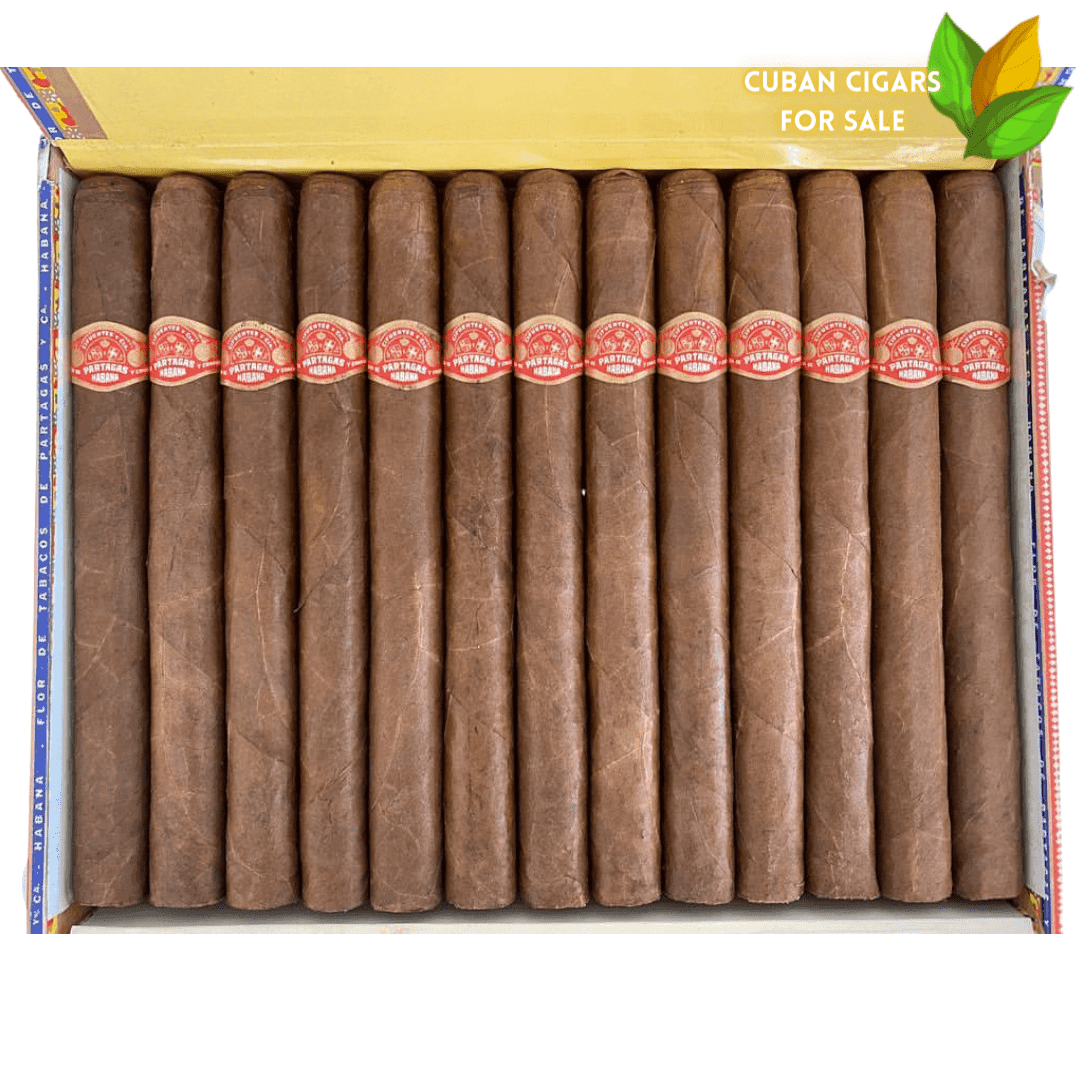
The construction details further highlight the differences between modern manufacturing and mid-century craftsmanship. Each unit was hand-rolled, weighing in at a mere 1.47 grams. This lightweight characteristic speaks to the delicate touch required by the torcedores of the era to craft such a thin smoke without compromising the draw or structural integrity of the leaf. The vitola utilized the standard "Band A" design, featuring the iconic red and gold coloring that instantly identifies it as a member of the Partagás lineage.
Packaging and Presentation
Unlike today's premium cigars, which are often housed in ornate humidors or polished wooden boxes, the presentation of the Senoritas was utilitarian and straightforward. The cigars were bundled in cardboard packs containing 20 units. This method of packaging suggests that the Senoritas was positioned as an accessible, everyday smoke—an affordable luxury for the working man rather than a special occasion indulgence.
Interestingly, the specific factory name responsible for the Senoritas has been lost to history, remaining undocumented in the brand's official records. Despite this minor mystery regarding its origin point, the cigar's identity remains intact through its branding and dimensions. The combination of simple packaging and the brand's famous band created a contrast between modest presentation and the high-regard for the tobacco inside.
Legacy in the Modern Era
For the modern historian or collector, the Partagás Senoritas offers more than just a smoking experience; it offers a connection to a bygone era of Cuban craftsmanship. The petit corona format was once the standard for smokers who desired a quick yet flavorful break, and this particular model carried the weight of the Partagás flavor profile—renowned for its richness—into a compact format. As time distances us further from the 1970s, the surviving cardboard packs and individual cigars serve as tangible evidence of the evolution of consumer preferences and manufacturing techniques in Havana.
Ultimately, the Senoritas stands as a reminder that not all classics survive the test of time, but those that do leave behind a legacy that is cherished by those willing to seek it out. It remains a symbol of a time when slender gauges ruled the day, and Partagás was at the forefront of delivering quality in every size imaginable.