Within the vast and storied timeline of Havana’s tobacco industry, certain releases capture a specific moment in history with remarkable clarity. The Partagás Regalias de la Reina Bueno is one such artifact, representing a distinct era where mechanized production played a larger role in meeting global demand. While the modern cigar market is dominated by the allure of fully hand-rolled premiums, this particular vitola serves as a reminder of a time when accessibility and consistency were paramount. For the serious collector, it remains a fascinating footnote in the evolution of one of Cuba’s oldest and most revered brands.

A Journey Through the Decades
The origins of the Regalias de la Reina Bueno can be traced back to a period preceding the 1960s, placing it firmly within the "pre-embargo" context that fascinates cigar historians. During this era, the Partagás brand was already a titan of the industry, and this specific format was introduced to provide a reliable, standard option for smokers. It was not a limited edition or a special release; rather, it was a staple of the regular production lineup, designed to be an approachable entry point into the brand’s portfolio.
What makes this cigar historically significant is its longevity. It survived one of the most tumultuous periods in Cuban history: the revolution and the subsequent nationalization of the tobacco industry. While many brands and vitolas vanished during the transition from private ownership to state control, the Regalias de la Reina Bueno persisted. It continued to be manufactured through the reorganization of the industry, bridging the gap between the old world of Cuban tobacco and the new. However, every story has an end; by the 1980s, shifting market preferences and a renewed focus on luxury hand-rolled cigars led to its eventual discontinuation, closing the book on this particular chapter.
Detailed Specifications and Dimensions
To understand the smoking experience this vitola offered, one must look at its physical dimensions. It was classified under the factory name Coronitas, a designation that signals a smaller, more slender profile compared to the robust "grandes" of today. The technical specifications outline a format designed for efficiency and brevity.
- Factory Name: Coronitas
- Dimensions: The cigar measured 117 mm (approximately 4⅝ inches) in length.
- Ring Gauge: A slender 40, offering a tighter draw and a concentrated flavor profile.
- Weight: Officially recorded at 6.78 grams.
These measurements positioned the Regalias de la Reina Bueno as a "small to medium" format. In practical terms, this meant it was an ideal choice for a shorter smoking session, perhaps a morning smoke or a brief afternoon respite, delivering the characteristic Partagás flavor profile without the time commitment required by larger Gordito or Churchill formats.
Construction and Visual Identity
The most defining characteristic of this cigar was its method of creation. Unlike the handcrafted masterpieces that dominate the modern Partagás catalog, the Regalias de la Reina Bueno was a machine-made cigar. This construction method was a common strategy of the era, utilized to produce large quantities at a lower cost, ensuring that the brand remained accessible to a wider demographic of consumers. While purists might turn their noses up at machine-made cigars today, this vitola was a legitimate production standard for decades.
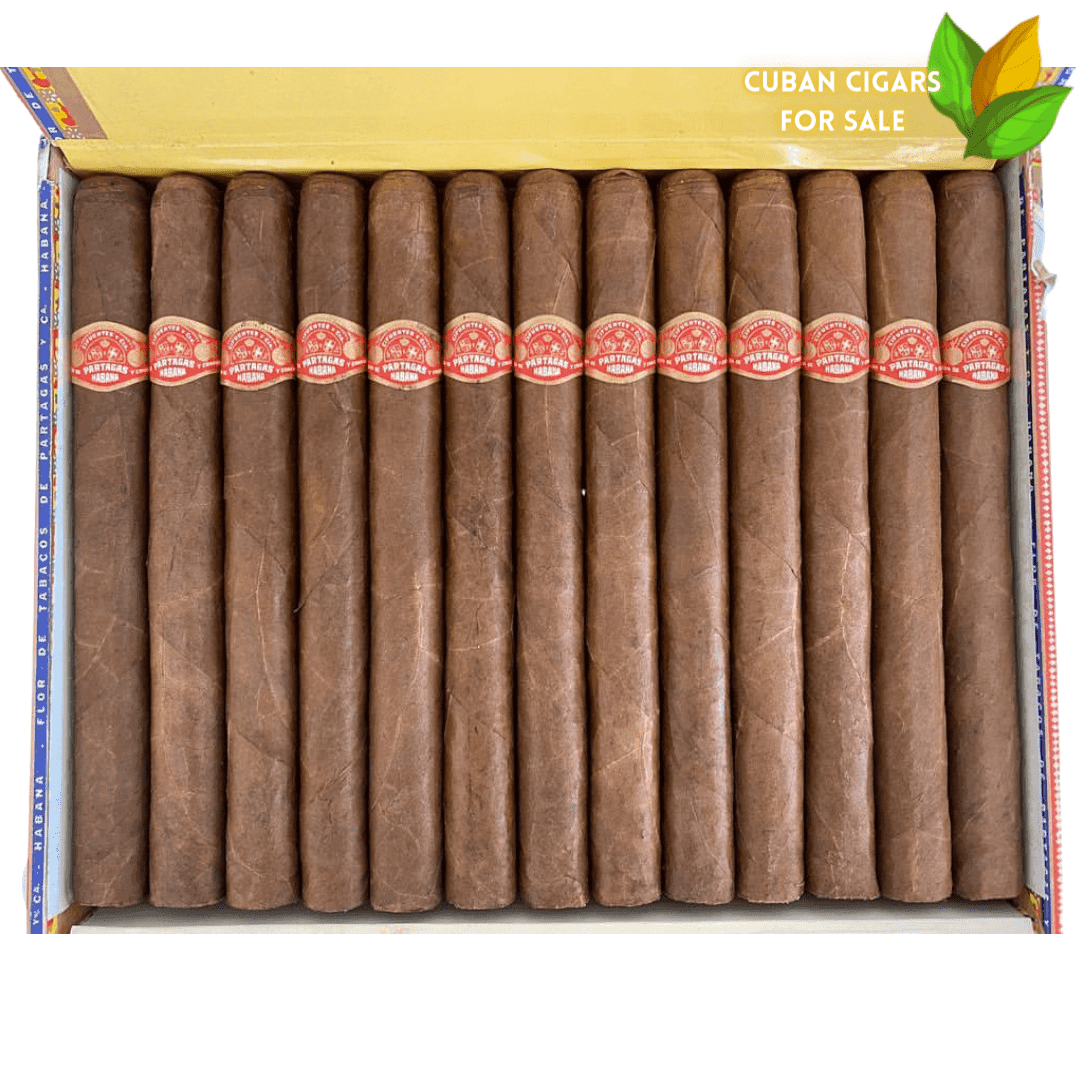
In terms of presentation, the cigar adhered to the brand's visual traditions. It featured the standard Partagás "A" band, the iconic red and gold labeling that signifies the factory's heritage. The packaging was practical yet elegant: each unit was individually encased in cellophane, a protective measure ensuring the cigar remained fresh from factory to retailer. They were arranged in dress boxes of 25, a presentation style that added a touch of prestige to what was essentially an everyday smoking product.
The Collector's Landscape
Today, the Regalias de la Reina Bueno exists solely as a collectible. Because it was discontinued in the 1980s and was produced via machine methods, it occupies a unique niche in the vintage market. It does not command the astronomical prices of pre-embargo hand-rolled double coronas, yet it is far rarer than modern production lines. For the cigar archivist, finding a well-preserved box offers a tangible connection to a lost era of Cuban manufacturing. It represents a time when the lines between "everyday" and "premium" were drawn differently, and when the mechanization of tobacco was an accepted, widespread practice in Havana.