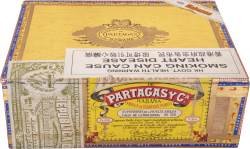
Among the constellation of legendary Cuban smokeables, few pieces carry the quiet prestige of the Partagás Petit Coronas Tubulares. This modest-sized tubular cigar, originally released under the factory designation "Eminentes," occupied a unique position in Havana's storied tobacco tradition for more than four decades before its eventual retirement. Today, surviving specimens represent coveted artifacts for collectors seeking to experience a genuine slice of Cuban cigar heritage.

Origins and Production Timeline
The Partagás Eminentes first reached humidified display cases well before the revolutionary year of 1960, establishing itself as an accessible yet quality-driven option within Partagás's extensive portfolio. Unlike many specialty releases that came and went with seasonal trends, this particular vitola sustained continuous production for an impressive span exceeding forty years. The brand's decision to retire the line officially arrived in 2002, marking the end of an era for this particular format. Since that discontinuation, locating authentic examples has become progressively more challenging, with remaining stock now concentrated primarily among dedicated collectors and specialty tobacconists who recognize the historical importance of these aging treasures.
Physical Characteristics and Measurements
The Eminentes presented smokers with a classically proportioned Petit Corona format that balanced smoking duration with flavor concentration. The specifications reflected practical considerations valued by everyday enthusiasts while maintaining the quality standards expected from Partagás's manufacturing processes.
- Factory designation: Eminentes
- Ring gauge: 42
- Length: 132 mm (approximately 5¼ inches)
- Official weight: 8.66 grams
- Production method: Machine-made construction
- Band style: Standard Partagás band featuring the brand's iconic imagery
Presentation and Packaging
Partagás chose an elegant presentation strategy for the Petit Coronas Tubulares that enhanced both practicality and visual appeal. Each cigar arrived individually sealed within its own aluminum tube, a feature that served multiple purposes for the discriminating smoker. The protective tube shielding the tobacco from external humidity fluctuations and physical damage made these cigars particularly suitable for travel, while the sealed environment helped preserve optimal moisture levels during extended storage periods. The aesthetic contribution of the tubular packaging should not be overlooked either, as the gleaming aluminum sleeve added a distinctive touch of sophistication to the overall unboxing experience. These individually protected specimens were then arranged in dress boxes containing twenty-five cigars each, presented in the traditional hinged-lid style characteristic of premium Cuban offerings.
Collector's Perspective and Historical Value
For serious enthusiasts documenting the evolution of Cuban cigar manufacturing, the Partagás Eminentes occupies a meaningful chapter in this ongoing narrative. Its machine-made construction represents an important segment of Havana's production history, demonstrating how major houses balanced quality consistency with accessibility during the twentieth century's latter half. The discontinuation in 2002 effectively transformed remaining inventory into finite resources, with each discovered box representing potential discovery of well-preserved specimens capable of providing insight into how these smokes developed with extended aging. Collectors prize these cigars not merely for smoking purposes but as tangible connections to an era when Cuban tobacco culture operated under different market dynamics and manufacturing philosophies. The combination of Partagás's prestigious brand heritage, the cigar's remarkably lengthy production run, and its current scarcity has elevated the Eminentes to a respected position among accessible yet historically significant Cuban collectibles.
For those fortunate enough to encounter authentic Partagás Petit Coronas Tubulares, the experience offers more than simple smoking pleasure—it provides direct contact with a distinctive moment in tobacco history that will never be repeated.