In the rarefied air of vintage cigar collecting, few finds generate as much quiet excitement as a discontinued Cuban vitola that has gracefully withstood the test of time. The Partagás Half a Corona stands as a prime example of this phenomenon—a small but mighty relic from an era when the Cuban cigar industry was undergoing seismic shifts. While modern aficionados often gravitate toward massive ring gauges, this diminutive format serves as a window into the past, offering a glimpse of what defined the standard for premium tobacco during the mid-20th century. It is a smoke that tells a story of heritage, transition, and the enduring legacy of one of Havana’s oldest factories.

A Journey Through a Transformative Era
The timeline of the Half a Corona’s existence places it squarely within one of the most tumultuous periods in Cuban history. Originating prior to 1960, this cigar emerged during the height of the island's pre-revolutionary boom, a time when Partagás had already established itself as a titan of the industry following its founding in 1845. The brand was in the midst of its "golden age," producing some of the world's most sought-after smokes.
What makes this particular vitola historically significant is its lifespan. Production continued well into the 1960s, bridging the gap between the pre-Castro private enterprise era and the post-revolution nationalized industry. By the time the 1970s rolled around, the Half a Corona was retired from regular production. This discontinuation means that every surviving example hails from a specific window of time, frozen in history. To hold one is to hold a piece of tobacco that survived the transition from a privately owned global export giant to a state-run monopoly, a witness to history wrapped in a leaf.
Technical Specifications and Visual Identity
Unlike the robustos and toros that dominate humidors today, the Half a Corona was built for a different kind of smoker. Its physical dimensions reflect a classic philosophy of cigar design, prioritizing concentration of flavor over duration of burn. The construction was entirely manual, adhering to the rigorous standards of the Partagás factory in Havana.
- Vitola Name: Half a Corona
- Factory Name: Unknown (undisclosed in historical records)
- Dimensions: 90mm (3½ inches) in length with a 42 ring gauge
- Weight: Officially recorded at 5.70g
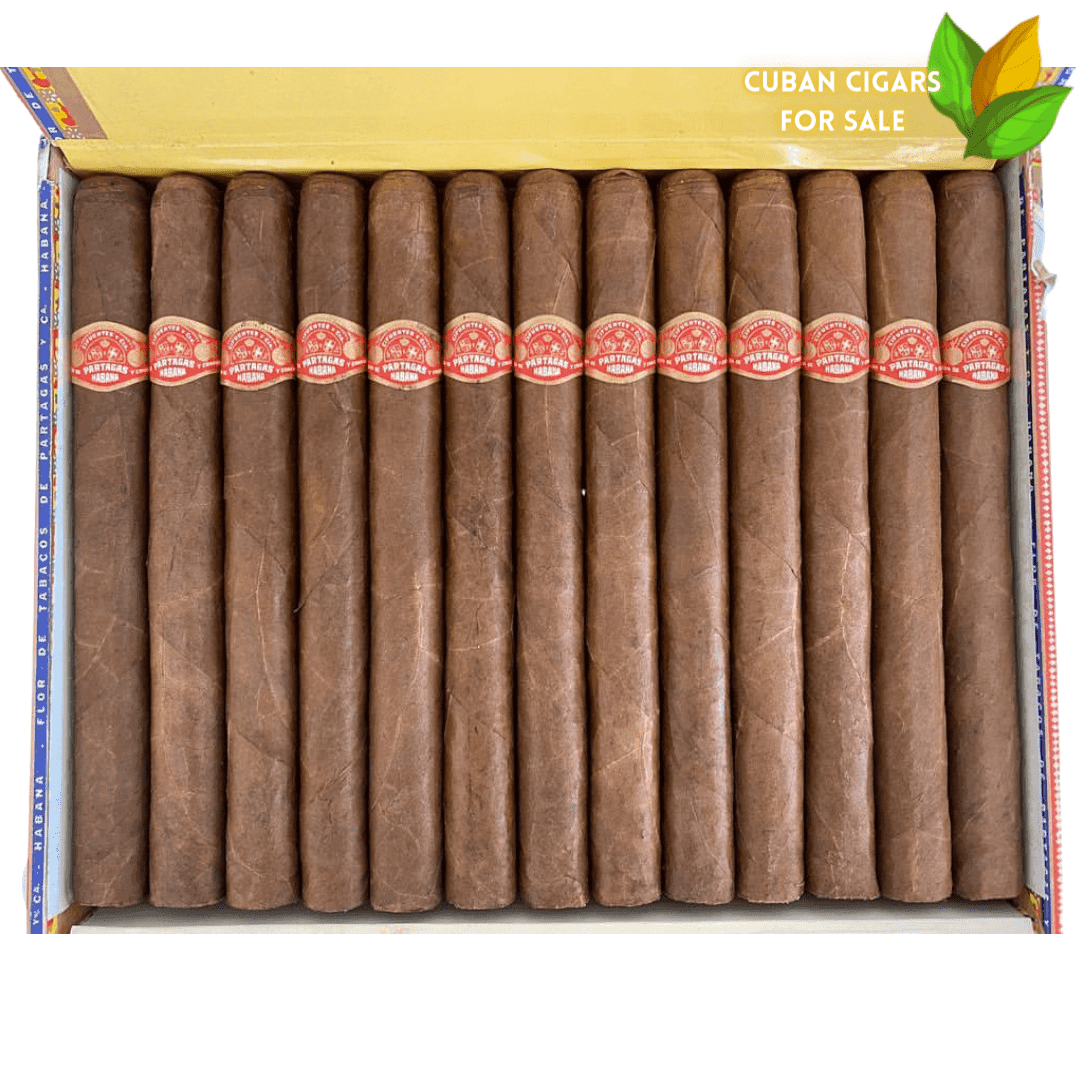
- Presentation: Handmade and sold in traditional dress boxes of 25
The visual presentation was distinct for its time, featuring an early iteration of the Half a Corona band design. This aesthetic choice differentiated it from other formats within the vast Partagás catalog, signaling to the knowledgeable smoker that they were about to experience something specific to this size. The packaging followed the standard dress box format of the era, ensuring that the cigars arrived in pristine condition, ready for aging or immediate enjoyment.
The Flavor of Efficiency
Modern smokers often view smaller ring gauges with skepticism, yet the Half a Corona challenges that bias. With a ring gauge of 42, the cigar offers a different structural ratio of filler to wrapper leaf. This thinner format means the wrapper plays a more prominent role in the flavor profile, potentially softening the blend while adding complexity. Partagás has always been revered for its distinct, robust character—often described as earthy, spicy, and full-bodied—and this vitola was designed to deliver that experience in a concise package.
The 90mm length suggests a smoking duration significantly shorter than a Churchill or a Double Corona. This made the cigar an ideal choice for enthusiasts who desired the high-quality tobacco Partagás was famous for but lacked the hour-plus required for a large format. It was the perfect "lunch break" cigar or a morning accompaniment to coffee, delivering the quintessential Partagás punch without demanding an entire afternoon. The concentration of flavor ensures that despite its small stature, the smoke remains memorable and potent.
A Trophy for the Connoisseur
Because production ceased during the 1970s, the Partagás Half a Corona has transitioned from a consumer product to a collector's item. The scarcity is driven by the simple math of consumption; for decades, these cigars were smoked and enjoyed, depleting the global inventory. Finding a well-preserved box or even a single surviving specimen is a challenge that requires patience and deep pockets.
For the serious collector of vintage Cubans, this cigar represents a vital link in the evolutionary chain of the Partagás brand. It serves as a benchmark for how the blend may have tasted decades ago, before agricultural shifts and blending changes altered modern profiles. Surviving examples are treated with reverence, not just for their monetary value, but for their status as ambassadors of a bygone era of Cuban craftsmanship. They remain a treasured artifact for those dedicated to preserving the rich tapestry of Havana’s cigar heritage.