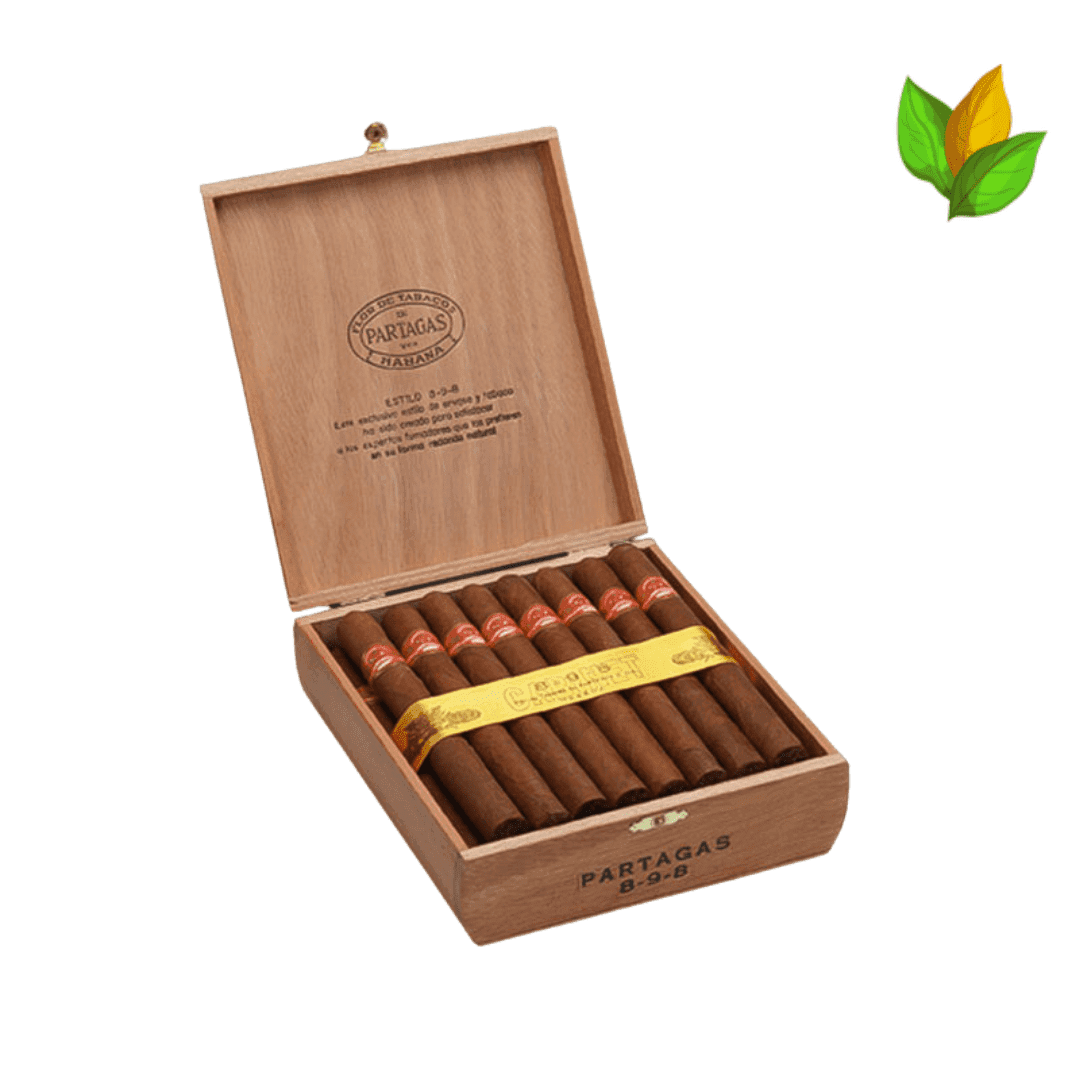
For the serious aficionado of Cuban tobacco, few pursuits are as rewarding as unearthing a vitola that has long since vanished from production schedules. The Partagás Fabulosos represents exactly this type of lost treasure—a cigar that encapsulates the grandeur of mid-century Havana. While the modern market is flooded with robustos and smaller formats, this "Grand Corona" harkens back to a time when smokers had the leisure to dedicate over an hour to a single, substantial experience. It is a relic of an era defined by different tastes and a slower pace of life, making it a highly sought-after prize for those curating a collection of historical Habanos.

The Imposing Anatomy of the Fabulosos
When one examines the Fabulosos, the first characteristic that commands attention is its sheer physical magnitude. This is not a cigar for a quick coffee break; it is a commitment in tobacco form. The dimensions suggest a smoking duration that could easily exceed ninety minutes, provided the draw remains consistent. The vitola falls into the category of "Grand Corona," a format that tests the roller's ability to maintain an even burn across such a lengthy expanse of filler leaves.
According to the official factory nomenclature, this size is known as the Partagás Largas. It is a shape that demands respect, requiring a steady hand to roll and a discerning eye to sort. For the collector, the technical specifications provide a clear picture of what to expect should a box ever surface at auction:
- Factory Name: Gran Coronas (Partagás Largas)
- Dimensions: A length of 237 mm (9⅜ inches) paired with a 50 ring gauge.
- Estimated Weight: Approximately 20.80 grams per unit.
- Construction: Entirely handmade, a testament to the craftsmanship of the period.
- Band: The classic Standard Band A, instantly recognizable to devotees of the brand.
The 50 ring gauge places this cigar in the modern sweet spot for thickness, yet the extended length sets it apart from contemporary offerings. This combination allows for a complex evolution of flavors, as the combustion point moves further away from the smoker's palate, cooling the smoke and allowing the nuances of the blend to shine through.
A Brief Yet Significant Production Timeline
The story of the Partagás Fabulosos is framed by a specific and transformative window in Cuban history. Evidence suggests these cigars were in production well before 1960, placing their genesis in the pre-revolutionary golden age of Cuban tobacco. This was a period when the island's export strategies and factory techniques were vastly different from the centralized systems that would emerge later. The cigar survived the seismic shifts of the era, remaining in production lines until its ultimate discontinuation in 1970.
This ten-year survival post-revolution makes the Fabulosos particularly fascinating. It serves as a bridge between two distinct epochs of Habanos production. To smoke one today—or even to possess one—is to hold a tangible piece of that transitional decade. The decision to cease production in 1970 likely stemmed from changing market demands and the rationalization of vitolas by the Cuban tobacco industry, which streamlined offerings to focus on more commercially viable sizes. Consequently, the Fabulosos became a marker of a bygone standard, representing a willingness to produce formats that are rarely seen in the modern era.
Presentation and Packaging Details
True to its premium status within the Partagás portfolio, the Fabulosos was not merely bundled into standard dress boxes. Instead, the brand opted for a presentation that emphasized individual care and preservation. Each cigar was swathed in aluminum foil, a choice that served a dual purpose: it protected the delicate wrapper leaf from abrasion and helped maintain the cigar's essential oils and humidity levels over long storage periods.
These foil-wrapped singles were then housed in individual slide lid boxes. This style of packaging, often reserved for higher-end or special release cigars, elevates the unboxing experience. It transforms the cigar from a mere commodity into a luxury artifact. For the collector, finding one of these slide lid boxes with its contents intact is akin to discovering a time capsule. The presence of the standard Band A on each specimen further anchors the cigar in the brand's visual heritage, signaling its authenticity and lineage to the Partagás factory floor.
The Collector's Perspective
Because the Partagás Fabulosos has not been manufactured for decades, surviving examples have ascended to the status of genuine collector's items. They are no longer merely objects for consumption; they are artifacts of industrial history. Finding a well-preserved specimen poses a significant challenge, as the ravages of time can be harsh on cigars of this age. Proper storage over decades is rare, making pristine boxes exceptionally valuable.
For the historian, these cigars offer a unique opportunity to analyze the blending profiles and construction techniques of the past. The tobacco used would have been harvested and processed using methods that may differ significantly from today's agricultural standards. Thus, the Fabulosos remains a commanding presence in the legacy of the brand—a symbol of a time when size and heft were paramount, and when the Grand Corona reigned supreme in the humidors of the world's most discerning smokers.