Before the boutique cigar boom took hold, a modest yet distinguished smoke rolled out of Havana’s historic Partagás factories, inviting smokers to experience a classic Cuban profile without a premium price tag. The Partagás Belvederes entered the market in the late‑1950s, a period when Cuban manufacturers were experimenting with formats that blended elegance with everyday accessibility. This machine‑made vitola lingered on shelves for more than four decades, becoming a quiet favorite among those who appreciated a consistent, value‑oriented draw. Although production ceased in the early 2000s, the Belvederes remain a sought‑after piece of Cuba’s cigar heritage, offering a glimpse into an era when a slender ring and modest length could still deliver rich, layered flavor.

The Story Behind Partagás Belvederes
From Pre‑Revolution Launch to Modern Collectibility
Introduced before 1960, the Belvederes quickly positioned themselves as an entry point into the Partagás lineup, which was otherwise dominated by hand‑crafted legends like the Serie D No. 4. The vitola’s slim profile and relatively short stature—under five inches—made it ideal for a quick, satisfying smoke during a lunch break or a casual evening. Over the years, the cigar’s reputation grew as a reliable, everyday option that still carried the brand’s signature depth. By the time production wrapped up in 2002, the Belvederes had logged more than forty years on the market, a testament to its staying power and the brand’s willingness to keep a budget‑friendly option alive.
Technical Specs and Construction
Dimensions, Weight, and Build
The Belvederes were engineered with a modest ring gauge of 39, paired with a length of 125 mm (approximately 4 ⅞ inches). This slender proportion placed the vitola firmly in the classic Cuban tradition of elegant, relatively short smokes, offering a comfortable draw without overwhelming the palate. The official weight hovered around 6.43 g, a figure that reflects its compact construction. As a machine‑made stick, each unit benefited from tight quality control, delivering a uniform burn and consistent smoke from the first puff to the last. The cigar carried the standard Partagás “band A” label, visually linking it to the brand’s broader identity.
- Ring Gauge: 39
- Length: 125 mm (4 ⅞ inches)
- Weight: 6.43 g
- Production Method: Machine‑made
- Band: Standard Partagás band A
Packaging and Production Evolution
Box Design and the Rise and Fall of Cellophane
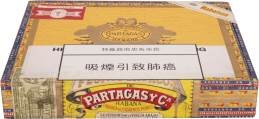
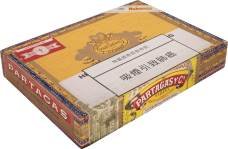
Throughout its lengthy run, the Belvederes were shipped in dress boxes holding 25 cigars, a format that mirrored many other Cuban vitolas of the era. Early releases featured individual cellophane sleeves for each cigar, providing an extra layer of protection against humidity and handling. This protective habit was discontinued in 2002, marking a shift toward more economical packaging that relied solely on the box’s internal humidity control. By the final years of production, smokers received the Belvederes in plain dress boxes without any additional wrapping, a change that reflected both cost‑cutting measures and a growing focus on environmental considerations.
- Box Type: Dress box
- Cigars per Box: 25
- Cellophane: Present on early releases, removed in 2002
- Final Packaging: Dress boxes without individual sleeves
Collecting and Legacy
Why the Belvederes Remain Relevant
For collectors, the Partagás Belvederes embody a vanished chapter of Cuban cigar history. Their lengthy production run ensured that the vitola was distributed globally, yet well‑preserved specimens are becoming increasingly elusive, especially those still encased in the original cellophane. The cigar’s modest dimensions and machine‑made nature make it an accessible gateway for newer enthusiasts curious about vintage Cuban profiles, while its discontinuation adds an element of scarcity that piques seasoned collectors. In the broader narrative of Partagás, the Belvederes serve as a reminder that not every celebrated brand must rely on ultra‑premium hand‑rolled formats; sometimes, a simple, well‑crafted smoke can leave a lasting imprint.