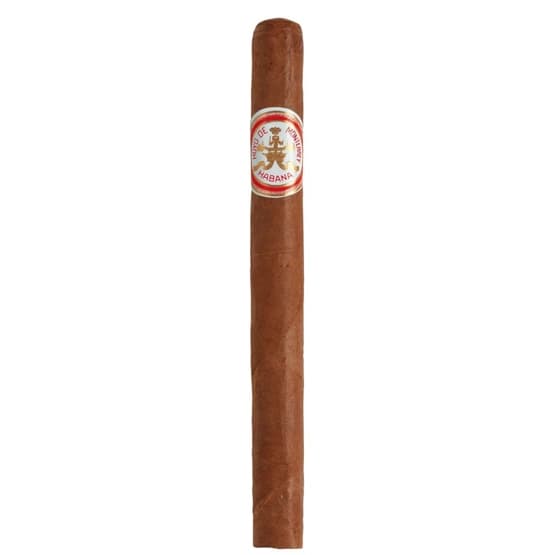
Among the treasured relics of Cuban cigar heritage stands the Hoyo de Monterrey Versailles, a slender smoke that once graced the humidors of discerning enthusiasts before vanishing from production lines decades ago. This elegant vitola embodied the artistry and tradition that made Cuban cigars legendary, offering a refined experience characterized by delicate complexity and graceful construction. Though no longer crafted, the Versailles remains a sought-after artifact for collectors who appreciate its place within the rich tapestry of Cuba's storied cigar legacy.

A Glimpse into History
The origins of the Versailles trace back to the twilight of Cuba's pre-revolution era, with initial production beginning sometime before 1960. This timing positioned the cigar among the pioneering releases within the Hoyo de Monterrey collection, a brand deeply rooted in the fertile tobacco fields of San Juan y Martínez within the prestigious Vuelta Abajo zone. The brand's association with this renowned growing region ensured that every leaf used in the Versailles carried the distinctive character that only Cuba's optimal terroir could provide.
For nearly three decades, the Versailles remained a fixture in the world of premium Cuban cigars. Its discontinuation arrived during the 1980s, marking the end of an era for this particular vitola. Throughout its lifespan, the cigar served as an accessible entry point for those seeking authentic Cuban craftsmanship, allowing smokers globally to experience the nuanced flavors that distinguished Hoyo de Monterrey's offerings from other producers.
Dimensions and Technical Details
The Versailles was crafted in what the factory designated as the Palmas format, a vitola celebrated for its elegant proportions. The cigar measured 170 millimeters in length, equivalent to approximately six and three-quarter inches, presenting smokers with an extended smoking session that rewarded patience and contemplation. A ring gauge of 33 millimeters gave the smoke its characteristic slender profile, distinguishing it from more robust options available in the Cuban portfolio.
Weighing in at 6.76 grams officially, each specimen was produced entirely by hand, reflecting the meticulous labor-intensive methods that Cuban cigar factories have employed for generations. The standard band bearing the designation "C" adorned each piece, providing immediate visual recognition for those familiar with the brand's identification system. These technical specifications combined to create a smoking experience that emphasized subtlety and refinement over raw intensity.
Presentation and Availability
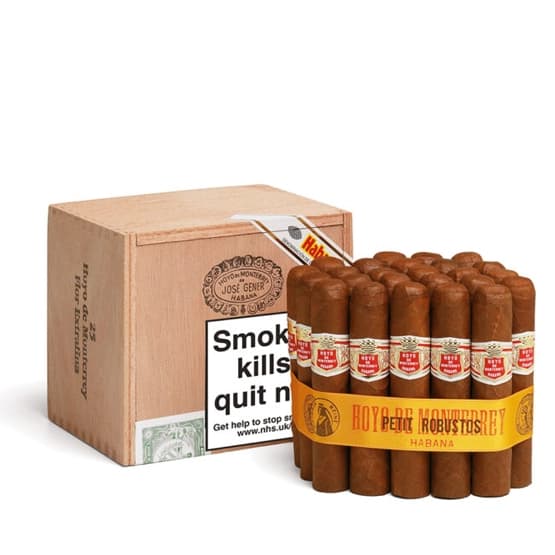
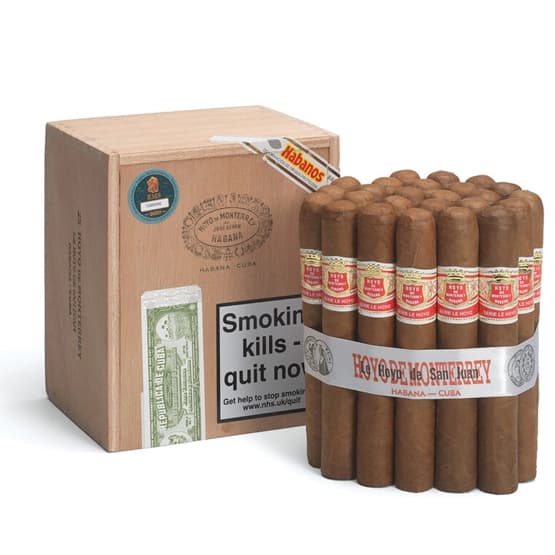
In keeping with Cuban tradition, the Versailles traveled from factory to consumers packaged in wooden boxes known as cajónes, each containing 100 individual cigars. This generous quantity catered primarily to serious aficionados and commercial establishments such as lounges and restaurants, where turnover warranted bulk purchasing. The substantial box size reflected the cigar's status as a reliable, mainstream option within the Hoyo de Monterrey range rather than a limited-edition rarity.
The presentation style communicated the cigar's positioning as an everyday luxury—accessible yet respectable, routine yet refined. Retailers could stock these boxes knowing demand would remain steady among customers seeking quality without the exclusivity premium that limited releases commanded.
The Collector's Treasure
Today, finding a pristine Hoyo de Monterrey Versailles has become a quest for dedicated collectors. Well-maintained specimens, preserved in optimal humidity and temperature conditions, command attention in auction circles and private collections worldwide. These surviving examples offer more than just smoking pleasure—they provide tangible connections to a specific chapter in Cuban cigar manufacturing history.
The Versailles exemplifies how certain cigars transcend their utilitarian purpose to become historical artifacts. Its production run spanning nearly thirty years captures a period when Cuban cigar makers balanced tradition with commercial viability. For those fortunate enough to encounter aged specimens, the smoking experience reveals layers of complexity developed through patient maturation, offering insights into how premium tobacco transforms over time.
While no new Versailles cigars will ever emerge from Cuban factories, their legacy persists through the memories of those who smoked them and the documentation of their place among Cuba's most significant vitolas. The Versailles stands as testament to an era when slender, elegant cigars commanded as much respect as their broader counterparts, reminding us that complexity need not arrive in oversized packages.