In the ever-shifting landscape of Cuban tobacco, where brands constantly evolve and vitolas are frequently retired, certain releases capture a specific moment in time that modern productions cannot replicate. The Hoyo de Monterrey Petit Coronations (2) serves as a distinct historical marker, representing a production style that has largely faded from the contemporary landscape. While many modern smokers chase the newest hand-rolled limited editions, this particular cigar tells the story of a different era—one where machine-made precision was a standard part of a prestigious brand's portfolio. It offers a window into the past, spanning a remarkable timeline that only concluded in the early years of the 21st century.

A Legacy Spanning Four Decades
The story of the Petit Coronations (2) begins long before the dawn of the current century. Its roots are firmly planted in the pre-1960 era, a foundational period for the Cuban cigar industry. This places the vitola among the older established releases within the extensive Hoyo de Monterrey portfolio, giving it a sense of heritage that newer formats often lack. For decades, this cigar was a staple of regular production, surviving the tumultuous changes within Cuba and the shifting demands of the global market.
What makes this cigar particularly significant is its longevity. It was not a fleeting special release; rather, it was a workhorse product that enjoyed a production run extending through what many consider the golden age of Cuban cigars. However, all things must eventually come to an end. After serving the brand faithfully for over forty years, the decision was made to cease production. In 2003, the Hoyo de Monterrey Petit Coronations (2) was officially removed from the regular production lineup, marking the conclusion of a significant chapter in the brand's history.
Technical Specifications and Construction
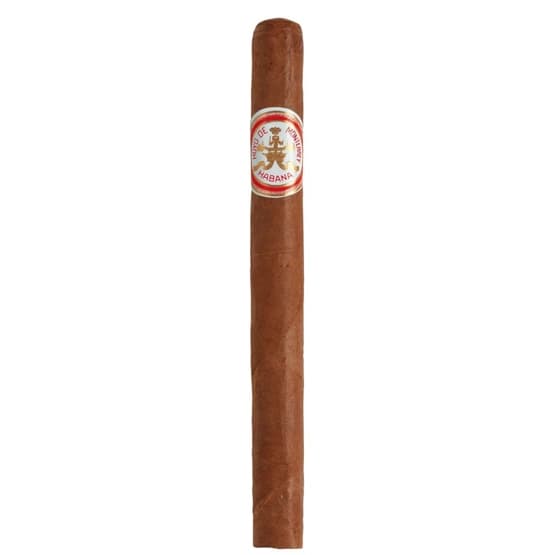
One of the defining characteristics of the Petit Coronations (2) is its construction method. Unlike the handcrafted, premium cigars that dominate the high-end market today, this vitola was machine-made. This method of assembly was a common sight in earlier decades, representing a different philosophy of cigar manufacturing—one that prioritized consistency and accessibility. While the brand is renowned for its hand-rolled masterpieces, this particular format demonstrated that Hoyo de Monterrey once embraced a broader spectrum of craftsmanship.
The technical dimensions of the cigar reveal a classic format that appeals to traditionalists. Known internally by the factory name Coronitas, the cigar measures 117 mm (approximately 4⅝ inches) in length. It features a ring gauge of 40, resulting in a slender profile that offers a distinct smoking experience compared to the thicker robustos and toros popular today. The official weight of each unit is recorded at 6.78 grams, and it is adorned with the standard band D, consistent with the branding of the era.
Presentation and Packaging Design
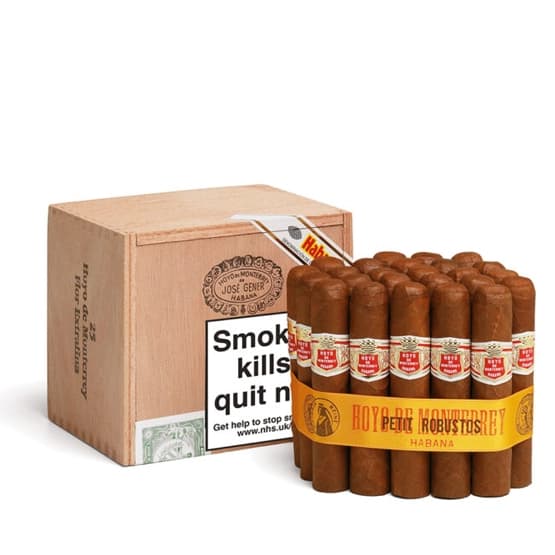
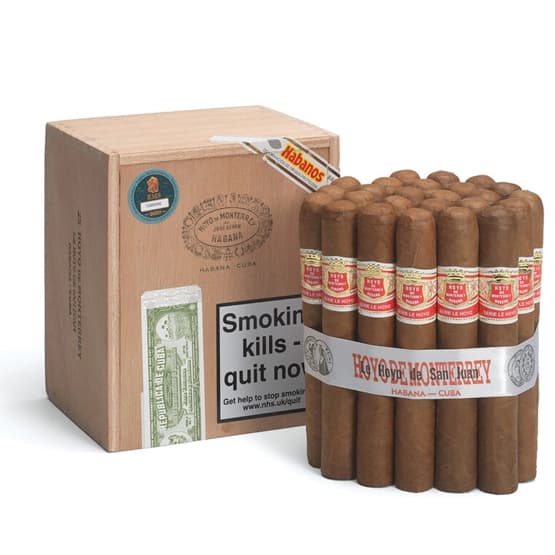
The presentation of the Petit Coronations (2) was designed with both aesthetics and utility in mind. The cigars were originally packaged in dress boxes, each containing 25 units. This style of boxing was standard for the brand, presenting the cigars in an organized and visually appealing manner suitable for retail shelves and personal collections alike.
However, the most notable feature of the packaging was the individual housing for each cigar. Every Petit Coronations (2) was encased in its own aluminum tube. This was far more than a mere decorative choice. The tubed presentation offered genuine practical benefits for the cigar enthusiast. The aluminum served as a protective shell, shielding the delicate wrapper leaf from physical damage during transport. Furthermore, the tube created a sealed environment that helped maintain optimal humidity levels. This ensured that the cigar retained its essential moisture and flavor profile during short-term storage or travel, a feature that made them a convenient option for smokers on the go.
The Modern Collector's Perspective
Since its discontinuation in 2003, the Petit Coronations (2) has transitioned from a readily available commodity to a sought-after piece of memorabilia. For collectors and historians of Cuban tobacco, the cigar represents a tangible link to a bygone era of manufacturing. Its status as a machine-made product from a pre-revolution lineage distinguishes it from the hand-rolled offerings that define the current Hoyo de Monterrey catalog. It stands as a testament to the brand's diverse history, appealing to those who wish to experience the "different approach" to Cuban craftsmanship referenced in the cigar's heritage.
As time passes, finding these cigars in good condition becomes increasingly difficult, adding to their allure. For the enthusiast, lighting a Hoyo de Monterrey Petit Coronations (2) is not merely an act of consumption; it is an opportunity to taste a specific slice of history that is no longer in production. It remains a fascinating artifact for those dedicated to preserving and understanding the full breadth of Cuba’s tobacco legacy.