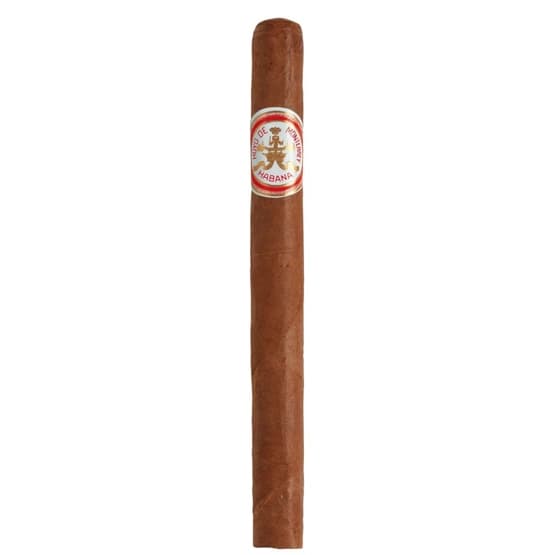
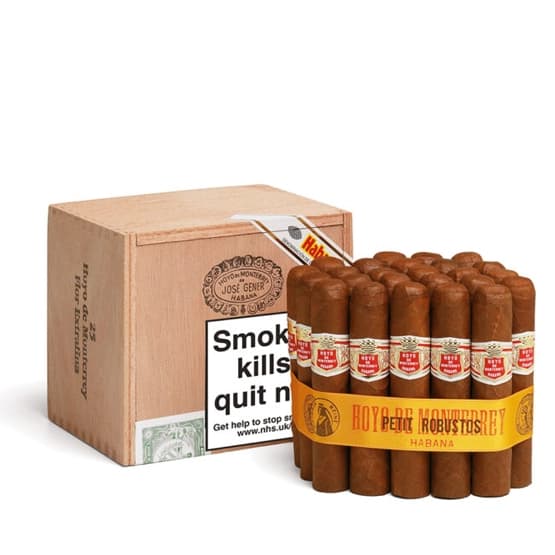
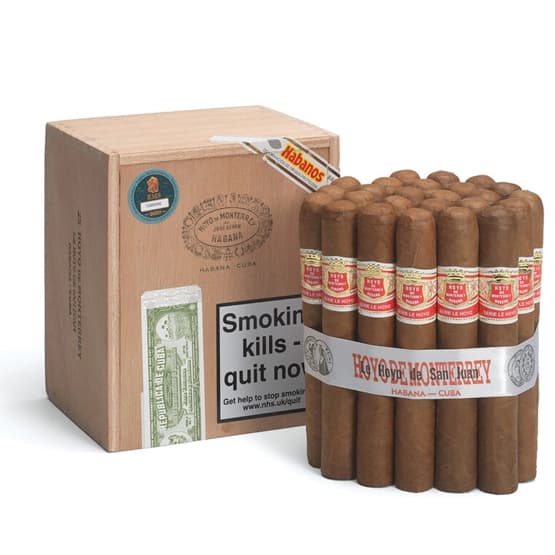
For the serious aficionado, few pursuits are as rewarding as unearthing a relic from Cuba’s golden age of tobacco. Among the most intriguing discoveries for a dedicated hunter is the Hoyo de Monterrey Obsequios, a standard-production cigar that has transformed into a holy grail for modern collectors. While Hoyo de Monterrey is renowned today for its elegant, mild-flavored profile, finding a surviving example of the Obsequios offers a rare opportunity to taste the brand as it existed in the mid-20th century, long before modern production shifts altered the landscape.

A Relic of Pre-Revolutionary Production
The story of the Obsequios is firmly rooted in a bygone era of Cuban craftsmanship. This particular cigar made its debut on the global market sometime before 1960, placing it firmly within what many consider the heyday of Cuban cigar manufacturing. During this period, Hoyo de Monterrey was solidifying its reputation on the world stage, and the Obsequios served as a key component of their regular lineup.
Unlike limited edition releases that are common today, the Obsequios was intended for everyday enjoyment. However, its lifespan was surprisingly brief. Production continued through the turbulent 1960s but ultimately ceased entirely during the 1970s. This relatively short manufacturing window—spanning roughly two decades—means that authentic stock is incredibly finite. As the decades pass, the scarcity of this specific vitola has elevated it from a simple smoke to a significant historical artifact.
The Britanicas Vitola: Form and Function
Central to the identity of the Obsequios is its specific shape, known by the factory name "Britanicas." This format is rarely seen in modern portfolios, making it a point of fascination for those who study cigar architecture. The dimensions strike a harmonious balance that appeals to traditionalists.
- Dimensions: The cigar measures 137 mm (approximately 5⅜ inches) in length.
- Ring Gauge: It features a ring gauge of 46, offering a comfortable girth that allows for a complex blend of filler leaves.
- Weight: The official weight is recorded at 9.34 grams, a testament to its dense, hand-rolled construction.
This size places the Obsequios in a unique category—longer than a classic Robusto but shorter than the Churchill-style formats that dominate many modern lineups. For the smoker, this geometry promises a smoking experience that provides enough girth for a cool burn while remaining manageable in terms of duration. As a fully handmade creation, the construction quality speaks to the manual dexterity that defined Cuban torcedors of the era.
Packaging and Visual Identification
Authenticating a box of vintage cigars requires a keen eye for detail, and the Obsequios has distinct markers that separate it from later releases. The cigar was originally sold in dress boxes of 25, a standard presentation format of the time that allowed the cigars to be displayed elegantly in shop windows. Collectors should pay close attention to the band design, as the Obsequios features the "early band 4" motif.
This specific band design serves as a crucial timestamp. Later variations of Hoyo de Monterrey bands differ significantly in font, color saturation, and embossing. Spotting the early band 4 design is often the first step in verifying that a box is indeed from the pre-1970s production run. The visual presentation, combined with the classic cedar box construction, creates an aesthetic that modern packaging rarely replicates with such authenticity.
Investment Potential and Legacy
In the world of vintage Cuban cigars, rarity drives value, and the Obsequios is a prime example of this principle. Because it was discontinued decades ago, every box that surfaces on the secondary market represents a dwindling supply. The cigar has become a notable reference point for historians tracking the evolution of the Hoyo de Monterrey brand. It serves as a benchmark for how the blend tasted before the standardization of later decades.
For collectors, acquiring an Obsequios is not just about owning a cigar; it is about preserving a specific moment in agricultural and manufacturing history. The Britanicas vitola, combined with the pedigree of a pre-1960s release, ensures that this cigar remains a highly sought-after trophy for those looking to complete their collection of mid-century Cubans.