In the constantly shifting landscape of Cuban tobacco, certain shapes fade into obscurity, remembered only by the most dedicated historians of the leaf. The Hoyo de Monterrey Margaritas stands as a prime example of this phenomenon—a slender masterpiece that once defined the sophisticated smoker’s portfolio but has since vanished from the regular production roster. Unlike the robust, thick cigars that dominate the modern market, this vitola was built on principles of delicacy and finesse. Its discontinuation left a void in the catalog of Havana’s offerings, marking the end of a forty-year reign for one of the most elegant formats to ever emerge from the island.

A Product of the Golden Age
The origins of the Margaritas trace back to a time before the Cuban Revolution, an era often romanticized as the golden age of cigar manufacturing. Having been established prior to 1960, this cigar witnessed the dramatic transformation of the island's tobacco industry. It survived the nationalization of private enterprises and the shifting global markets that defined the latter half of the twentieth century. For four decades, it remained a staple in the Hoyo de Monterrey lineup, a testament to its enduring popularity and the timeless nature of its blend. However, all things must eventually pass; in 2002, the decision was made to cease production, turning existing stock into instant collector's items.
The Mechanics of the Carolinas Vitola
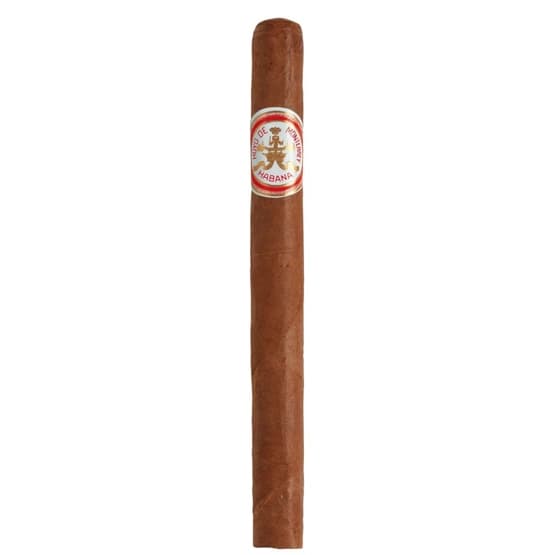
To understand the unique character of the Margaritas, one must look closely at its physical dimensions. In the factory, it was known by the poetic name "Carolinas," a moniker that speaks to the specific challenges of its construction. The cigar was a study in slenderness, measuring 121 millimeters (approximately 4¾ inches) in length but possessing a remarkably thin ring gauge of just 26. This profile places it firmly in the realm of the panatela, a format that requires exceptional skill to manufacture. Achieving a proper draw in such a narrow circumference is a technical feat; the roller must ensure the fill is neither too tight nor too loose. With an official weight of a mere 2.94 grams, the construction had to be flawless to ensure an even burn, a characteristic that distinguished the best Cuban rollers from the rest.
- Factory Name: Carolinas
- Dimensions: 121 mm x 26 ring gauge
- Status: Discontinued in 2002
- Packaging: Dress boxes of 25 units
Flavor Profile and Smoking Experience
Modern trends have skewed heavily toward massive ring gauges, often prioritizing volume and cool smoke over intensity of flavor. The Margaritas, however, offered a starkly different experience. Because of its narrow gauge, the smoke traveled rapidly from the foot to the lips, concentrating the heat and amplifying the nuances of the wrapper leaf. Aficionados who favored this format were often seeking a cerebral smoke rather than a blunt instrument of nicotine. The thin profile meant the wrapper contributed significantly to the overall taste, allowing the smoker to detect the subtle floral and herbal notes that Hoyo de Monterrey is famous for. It was a cigar that demanded attention; a moment of distraction could easily lead to a harsh experience if not nursed properly, rewarding those who treated it with respect.
Presentation and Enduring Legacy
Visually, the Margaritas adhered to the classic aesthetic of its brand. It was adorned with Hoyo de Monterrey’s standard band C, a simple yet instantly recognizable emblem that signaled quality. The cigars were presented in traditional dress boxes containing 25 units, a packaging style that allowed the tobaccos to marry and age gracefully over years of storage. Today, finding an original box is a rare treat for collectors. The Margaritas serves as a reminder of a different era in Cuban cigar making—an era where the challenge was not how much tobacco could be packed into a cigar, but how elegantly the tobacco could be presented. While it no longer rolls off the tables in Havana, the legacy of the Margaritas survives in the humidors of collectors and the annals of cigar history, preserving its status as a lost icon of elegance.