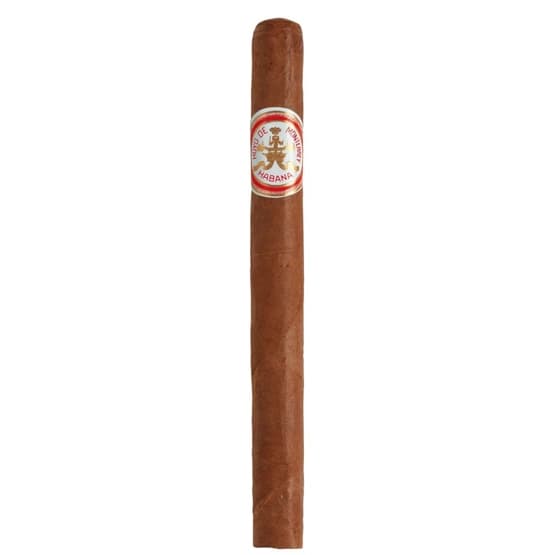
Within the storied lineage of Cuban tobacco, few names evoke the lush fertility of the Vuelta Abajo region quite like Hoyo de Monterrey. While modern enthusiasts often chase limited editions and grand hand-rolled masterpieces, there exists a distinct category of vintage releases that tells a quieter, yet equally fascinating story of the industry's past. The Humidor No.1 stands out as a prime example of this bygone era. Long removed from store shelves, this specific vitola offers a unique window into the industrial capabilities and consumer tastes of mid-20th century Cuba, representing a chapter of cigar history that has largely faded from memory.

A Journey Through Time: Origins and Production
The story of the Humidor No.1 begins in an era preceding the sweeping changes of the 1950s and 1960s. Released well before 1960, this cigar served as a staple in the Hoyo de Monterrey catalog for decades. Its longevity is a testament to its popularity; it survived the transition into the revolutionary period and remained a fixture in the lineup until the 1980s. This impressive production run suggests that the cigar maintained a loyal following through some of the most turbulent times in Cuban history, eventually fading from production as market trends shifted toward different formats.
In the internal lexicon of the Cuban tobacco industry, this specific size was known by the factory name "Conservas." This designation, rooted in older industry nomenclature, helps historians and collectors identify the specific dimensions and classification of the cigar within the vast portfolio of Habanos. Such factory names often served as a secret language for torcedores (cigar rollers) and warehouse managers, distinguishing subtle variations in blend and shape.
The Mechanics of Quality: Construction and Format
One of the most defining characteristics of the Humidor No.1 was its method of creation. Unlike the premium hand-rolled cigars that dominate the luxury market today, this offering was machine-made. This distinction is crucial for understanding its historical context. During the mid-20th century, machine manufacturing was not seen as a deficit but rather as a marvel of efficiency. It allowed for the mass production of consistent product, making the esteemed Hoyo de Monterrey flavor profile accessible to a much wider audience than hand-rolling could support.
The automation process ensured that every cigar met a uniform standard, a feat sometimes difficult to achieve with human hands alone. Adorned with the standard Band B, the cigar was visually consistent with the rest of the Hoyo de Monterrey family, signaling its pedigree despite the mechanical origin. For the smoker of that era, it offered a reliable experience, blending the rich tobacco of the region with the precision of modern industry.
Technical Specifications
- Dimensions: 145 mm (5¾ inches) in length with a 44 ring gauge.
- Factory Name: Conservas (Old Nomenclature).
- Official Weight: 9.57 grams.
- Construction: Machine-made.
- Band: Standard Band B.
Presentation: A Collector's Dream
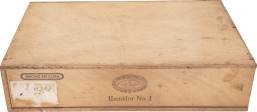
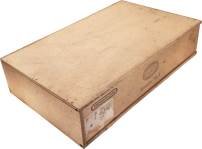
True to its evocative name, the Humidor No.1 was sold in a presentation that went far beyond the standard dress box. The cigars were housed in a dedicated humidor, a container designed specifically for storage and preservation. This packaging choice elevated the product from a simple consumer good to a potential heirloom. Inside this special box lay 50 cigars, each individually swathed in protective cellophane. This wrapping served a dual purpose: it protected the delicate wrapper leaves from damage during transport and helped maintain the integrity of the cigar's structure over long periods.
For the modern collector, this original presentation is the holy grail. Finding a surviving humidor with its original contents intact is a rare occurrence. It transforms the purchase from a transaction into an acquisition of historical significance. The very existence of such packaging highlights how some machine-made cigars were once treated with the same reverence accorded to hand-rolled premiums today.
The Enduring Legacy of a Discontinued Classic
Since its discontinuation in the 1980s, the Humidor No.1 has transitioned from a regular production item to a sought-after artifact. The discontinuation of machine-made cigars from certain prestigious Cuban brands marked a shift in the industry's focus toward hand-craftsmanship, leaving cigars like the Humidor No.1 behind. Today, surviving examples are viewed as tangible pieces of history, offering a flavor profile and construction style that simply no longer exists in the commercial market.
For serious aficionados, the allure lies in the rarity. A sealed humidor from the pre-1980s era offers a taste of Cuban terroir that has been aged naturally for decades. While the machinery that produced them has long since been retired or repurposed, the legacy of the Hoyo de Monterrey Humidor No.1 endures, reminding us that the history of Cuban cigars is as much about accessibility and industrial innovation as it is about the artisanal hand-roll.