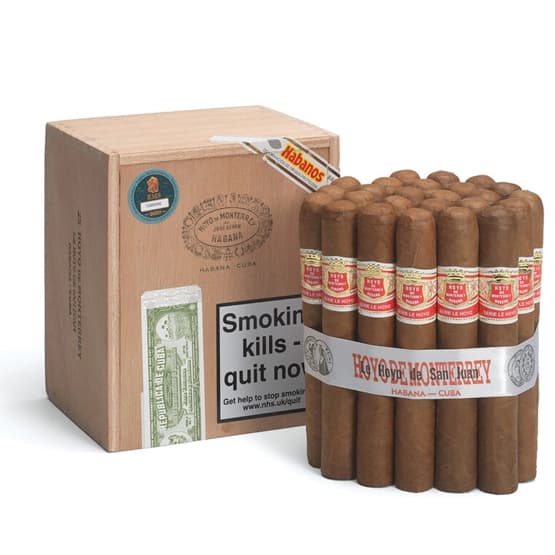
For the seasoned aficionado, the landscape of Cuban cigars is constantly shifting, with beloved formats often vanishing as quietly as they arrived. Among these departed classics, the Hoyo de Monterrey Hoyo Corona stands out as a benchmark of traditional smoking elegance. For nearly half a century, this vitola served as a cornerstone of the Hoyo de Monterrey portfolio, offering a smoking experience defined by grace rather than brute strength. While it has since left regular production, leaving a void in the humidors of collectors, its legacy remains a fascinating study in the evolution of Cuban tobacco standards.

A Legacy Spanning Five Decades
The story of the Hoyo Corona begins in an era that predates the modern Cuban cigar industry as we know it. Released prior to the watershed year of 1960, this cigar survived the tumultuous transition of the revolution and remained a staple on shelves for decades. Its continued production until 2006 serves as a testament to its enduring popularity among smokers who prioritized balance and finesse. In a market that has seen drastic changes in blending and size preferences over the years, the Hoyo Corona managed to maintain its relevance for an impressive 47-year run.
Internally, the cigar was known simply by the factory name "Coronas." This straightforward nomenclature reflects a bygone era of Cuban manufacturing, where cigars were often named directly after their physical format rather than given elaborate marketing titles. This directness mirrored the cigar’s own character: unpretentious, reliable, and rooted in tradition. Its discontinuation marked the end of an era for the brand, removing a classic option for those who preferred the refined profile that Hoyo de Monterrey is world-renowned for.
The Definition of a Classic Vitola
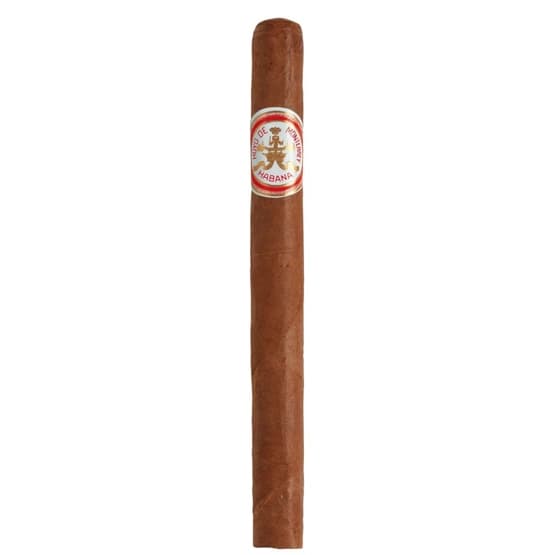
At the heart of the Hoyo Corona’s appeal was its adherence to the true Corona dimensions, a format that has become increasingly rare in an age favoring thicker ring gauges. The measurements were precise and classic, designed to provide a concentrated flavor profile that only this specific length and girth can offer.
- Dimensions: The cigar measured 142 mm (5⅝″) in length.
- Ring Gauge: A slender 42, allowing for a higher wrapper-to-filler ratio.
- Factory Name: Designated simply as "Coronas."
- Construction: Entirely handmade with an official weight of 9.29 g.
This size is often cited by purists as the ideal vehicle for the Hoyo de Monterrey blend. Unlike the larger Double Coronas or robust Robustos, the 42 ring gauge forces the smoker to focus on the interplay between the wrapper leaf and the filler. The result was typically a smoking experience that was elegant and approachable, shunning the heavy, overwhelming power often found in other marcas in favor of a nuanced, aromatic profile.
Packaging and Presentation
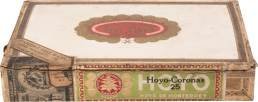
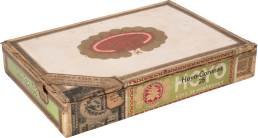
Throughout its lifespan, the Hoyo Corona was presented in formats that reflected the standard practices of the Cuban industry, as well as some historical quirks that are now highly sought after. The most common presentation was the standard dress box containing 25 cigars. This packaging remained the primary method of distribution for the majority of the cigar's production run, featuring the iconic livery of the Hoyo de Monterrey brand.
However, for a portion of its history, specifically until the 1980s, enthusiasts could find the Hoyo Corona in a far more distinctive vessel: a glass jar containing 50 cigars. This presentation style, often referred to as a "caballero" or simply a glass jar release, is now a relic of the past. These jars have become prized collector's items, not only for their nostalgic aesthetic but for the practical storage benefits the glass provides. Finding one of these vintage jars today offers a tangible connection to the earlier days of Cuban cigar distribution.
Remembering a Departed Classic
The departure of the Hoyo Corona from the regular lineup in 2006 signaled a shift in consumer trends toward larger vitolas, yet it left a dedicated following wanting more. As a pre-1960 release that successfully bridged the gap into the new millennium, this cigar witnessed the industry transform around it while it steadfastly maintained its traditional character. Today, it remains a point of reference for historians and collectors exploring the depth of the Hoyo de Monterrey marca. While it can no longer be purchased from a retailer's shelf, the Hoyo Corona serves as a reminder of a time when the Corona was king, and elegance was the primary pursuit of the cigar roller.