For the discerning aficionado of Cuban tobacco, the allure often lies in the hunt for long-forgotten vitolas that tell a story of a bygone industrial era. Among these historical artifacts, the H. Upmann Singulares stands out as a testament to the longevity and consistency of the brand. While modern enthusiasts frequently prioritize hand-rolled craftsmanship, there is a unique charm found in the machine-made precision of the mid-20th century. This specific cigar, which enjoyed a production run spanning over four decades, offers a fascinating case study in packaging evolution and brand standardization within the Cuban cigar industry.

Technical Profile and Dimensions
To fully appreciate the Singulares, one must first understand its physical specifications. In the factory nomenclature, this vitola is known as a Coronitas. This designation refers to a slightly smaller format than the standard Corona, making it a convenient choice for smokers seeking a shorter duration experience. The cigar measures exactly 117 mm (4⅝ inches) in length with a ring gauge of 40. Weighing in at a modest 6.78 grams, the Singulares was designed to be a lightweight, accessible smoke. The construction method is a defining characteristic; these cigars were machine-manufactured. This industrial approach ensured a consistent draw and burn, providing smokers with a reliable expression of the H. Upmann flavor profile without the premium price tag associated with fully hand-rolled counterparts.
A Historical Timeline of Production
The timeline of the H. Upmann Singulares is extensive, rooted deeply in the pre-revolutionary history of Cuba. Production began well before the sweeping changes of 1960, establishing the cigar as a staple for both local consumers and international tourists during the island's golden age of tourism. Its resilience in the marketplace is noteworthy; while many brands and sizes were culled during the rationalization of the Cuban cigar industry in the latter half of the 20th century, the Singulares endured.
However, all good things must come to an end. After serving the market for decades, the Singulares was officially discontinued in 2003. Its removal from the regular production lineup marked the conclusion of a significant chapter for the brand, leaving behind a legacy that is now preserved only through the secondary market and the collections of vintage enthusiasts.

Packaging Formats Through the Years
Over its long lifespan, the Singulares was presented to the public in two distinct packaging configurations, each reflecting the distribution norms of its time:
- The Dress Box of 25: This was the standard presentation for the modern era. Cigars were individually housed in aluminum tubes and arranged in decorative boxes. This format remained in circulation until the final discontinuation in 2003.
- The Cajón of 100: An older, bulk format typically reserved for the pre-1960s era. These large wooden crates contained 100 cigars, also tubed, and were intended for high-volume purchase. This specific format was phased out prior to the 1960s, making surviving examples exceptionally rare.
Evolution of Bands and Tubes
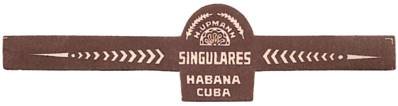
For the collector, the subtle variations in the Singulares’ presentation offer a complex area of study. The visual identity of the cigar underwent several transformations that mirror the broader branding shifts of Habanos. Initially, the cigars featured a specialized band that explicitly bore the name "Singulares." This early branding distinguished the line as a unique offering within the portfolio.
As time progressed and brand consistency became a priority, the specific "Singulares" band was retired. It was replaced by the standard H. Upmann bands, specifically the Series A and B designs, which became the face of the brand in later decades. Furthermore, the aluminum tubes themselves serve as a dating mechanism for vintage hunters. Early iterations of the tube utilized push-on end caps, a design that differs significantly from the standard tubes used in later production runs. Identifying these specific tube mechanics is crucial when attempting to date a box to the pre- or post-revolutionary period.
Collecting the Singulares Today
Why does a discontinued, machine-made cigar continue to generate interest? The answer lies in the aging potential of the tobacco. Despite the machine-bunched construction, the leaf inside remained genuine Cuban tobacco from the Vuelta Abajo region. Decades of aging have mellowed the often-harsh characteristics associated with machine-made smokes, transforming them into smooth, nuanced experiences that offer a taste of history.
For the modern collector, the Singulares represents an accessible entry point into the world of vintage Cubans. It serves as a tangible link to the pre-1960 era through its early box codes and tube designs, while the later Dress Box variations offer a snapshot of the brand's identity at the turn of the millennium. Whether preserved for historical significance or ignited for a brief taste of the past, the Singulares remains a distinguished member of the H. Upmann family tree.