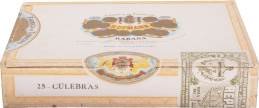
Every collector dreams of stumbling upon a cigar that looks like a coiled serpent, yet burns like a refined smoke. The H. Upmann Culebras offers exactly that: a trio of slim cigars wound together into a snake‑like braid, a format that has fascinated aficionados for decades. This piece of cigar history is not just a novelty; it carries a rich backstory, precise engineering, and a scarcity that makes it a prized find in today’s market.

Origins of the Culebras Format
The story begins well before the 1960s, when the H. Upmann brand released a format that broke away from conventional vitolas. Known simply as the Culebras—Spanish for “snakes”—the design was conceived as a clever way for factory workers to carry home three cigars without drawing undue attention. By intertwining three separate cigars into a single braided bundle, the appearance resembled one large, oddly shaped stick rather than three individual smokes, allowing the workers to slip the bundle past supervisors with relative ease. This playful practicality turned into a sought‑after novelty that eventually captured the interest of serious collectors worldwide.
Construction and Design Details
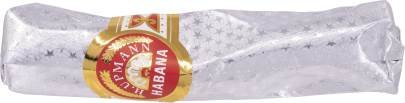
Mechanized production gave the H. Upmann Culebras a uniform quality that was hard to achieve by hand rolling. Each of the three intertwined cigars measured 146 mm in length—roughly 5 ¾ inches—and sported a 39‑ring gauge, resulting in a slender, elegant profile that burned evenly. The official weight settled at 6.67 g, a spec that reflected the lightweight nature of the braided sticks. The cigar’s visual identity was reinforced by a notably large band, inspired by the classic Type B motif, which wrapped around the central braid and highlighted the brand’s heritage.
- Length: 146 mm (5 ¾″)
- Ring gauge: 39
- Weight: 6.67 g
- Construction: Machine‑made
- Band style: Large, Type B‑derived
Packaging and Presentation
When it came to retail, H. Upmann presented the Culebras in sleek dress boxes that held 25 individual cigars. Each cigar was individually encased in thin aluminum foil to guard against moisture and handling damage. Inside the box, the layout was cleverly organized: eight full sets of three braided cigars were placed side by side, accompanied by a solitary single cigar to round out the count. This arrangement not only protected the delicate braids but also gave buyers a visual preview of the twisted trio that defined the format.
Collectibility and Market Impact
Production of the H. Upmann Culebras ceased in the early 1980s, marking the end of an era for this peculiar vitola. Since then, surviving boxes have become rare artifacts, often surfacing in auction houses and specialty tobacconists. The combination of its distinctive braided silhouette, limited run, and historical narrative has propelled the Culebras into the upper echelons of cigar collectibles. Today, enthusiasts who manage to acquire an original box can expect spirited bidding wars, with prices reflecting both the cigar’s unique aesthetic and its storied past.
For those intrigued by the broader H. Upmann legacy, exploring the full range of the brand’s releases reveals a tradition of quality and innovation that continues to inspire both smokers and collectors alike.