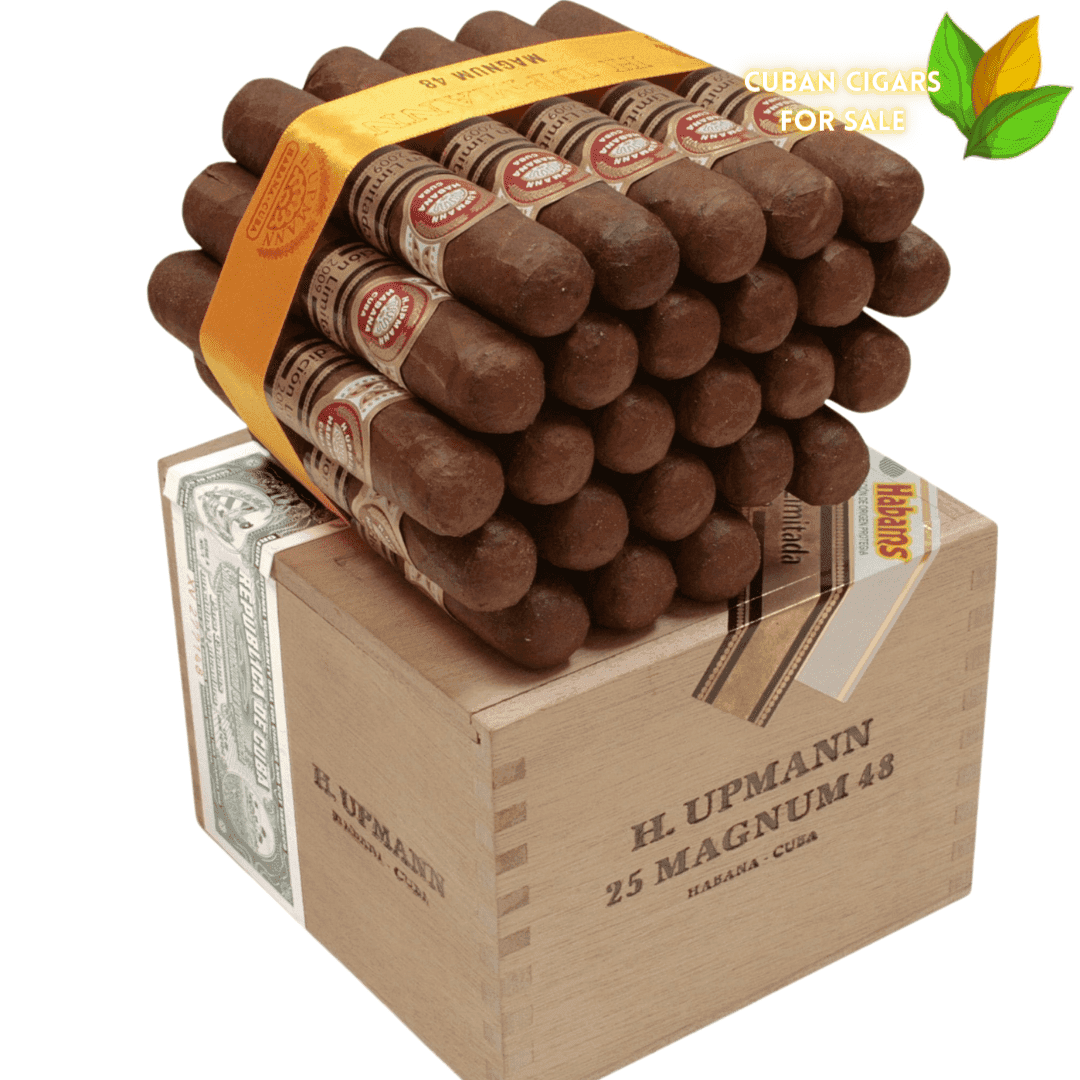
Few stories in the world of premium tobacco are as captivating as the legacy of H. Upmann - from 19th century banker to cigar legend. What began as a savvy marketing gimmick by a German banker in Havana eventually blossomed into one of the most enduring names in the history of Cuban cigars. Today, H. Upmann stands as a pillar of the Habanos portfolio, offering aficionados a taste of history wrapped in impeccable craftsmanship. This is the story of how a financial institution gave birth to a tobacco dynasty.
The Origins: A Banker's Gift to the World
The year was 1844, and Havana was a bustling hub of commerce and culture. Hermann Upmann, a German banker with a keen eye for business, arrived in Cuba with the intent of opening a branch office for his family's banking business. In a stroke of genius, Upmann decided to commission a line of cigars to be used as promotional gifts for his wealthy banking clients. He never anticipated that the cigars would become far more popular than his banking services.
The cigars were encased in distinctive boxes stamped with the Upmann name, a branding strategy that proved revolutionary. The quality of the tobacco was exceptional, and soon, demand for the cigars outpaced interest in the bank itself. Recognizing the shift in opportunity, Hermann Upmann transitioned from a financier to a cigar maker. By 1844, the H. Upmann brand was officially founded, marking the birth of a cigar empire that would survive wars, revolutions, and economic shifts.
- Founder: Hermann Upmann (German banker)
- Founding Year: 1844
- Original Purpose: Promotional gifts for banking clients
- Key Innovation: Using cedar-lined boxes for branding and preservation
The Golden Age and Global Expansion
Following the brand's inception, H. Upmann entered what many historians consider its Golden Age. The brand quickly gained a reputation for producing cigars that were consistently smooth, approachable, yet complex enough to satisfy the most discerning palates. This reputation allowed the brand to expand rapidly beyond Cuban shores, finding eager markets in Europe and the United States.
During the late 19th and early 20th centuries, the H. Upmann factory became a landmark in Havana. The brand was instrumental in establishing the international prestige of Cuban cigars. They were among the first to utilize innovative marketing techniques, ensuring their distinctive logo—a combination of the bank's initials and cigar imagery—became a globally recognized symbol of quality. This era solidified the brand's status not just as a manufacturer, but as a standard-bearer for the industry.
Signature Cigars That Defined a Legacy
Over its 180-year history, H. Upmann has produced some of the most iconic vitolas in the world. Known for their distinctively smooth, medium-bodied flavor profile, these cigars typically offer notes of wood, cocoa, and subtle spices. The brand has mastered the art of the "elegant smoke"—cigars that are refined rather than overpowering.
Among the most celebrated offerings in the current Habanos catalog are the Magnum 46, a robusto extra that perfectly encapsulates the brand's house profile, and the majestic Sir Winston, a massive double corona named after the British Prime Minister who was famously fond of Cuban tobacco. Another modern classic, the Magnum 50, has become a favorite for its generous ring gauge and creamy finish.
Iconic Vitolas
- Magnum 46: Often cited as the quintessential H. Upmann experience.
- Sir Winston: A grand double corona for the seasoned aficionado.
- Connossieur A: A recent addition featuring a unique torpedo shape.
Surviving Turbulence: Revolution and Nationalization
Like all Cuban cigar brands, H. Upmann faced its greatest challenge during the Cuban Revolution of 1959. The nationalization of private industries by the new government changed the landscape of Cuban tobacco forever. The original Upmann family, being foreign nationals, lost their holdings. However, unlike some brands that disappeared or moved their operations entirely to the Dominican Republic or Honduras, H. Upmann remained in Cuba.
The brand was absorbed into the state-run tobacco monopoly, eventually becoming part of Habanos S.A., the joint venture between the Cuban state and the British corporation Imperial Brands. While the ownership changed, the commitment to the brand's heritage remained. The Cuban tobacco institute maintained the original blends and continued production, ensuring that the legacy of Hermann Upmann was preserved for future generations. Today, H. Upmann is produced in various factories across Cuba, adhering to the strict quality controls that define the modern Cuban cigar industry.
H. Upmann Today: A Living Legend
In the modern era, the legacy of H. Upmann - from 19th century banker to cigar legend is more vibrant than ever. The brand continues to be a top seller globally, bridging the gap between history and modern luxury. Whether enjoyed in a private lounge in Havana or a speakeasy in London, an H. Upmann cigar offers a direct link to 1844.
For the modern aficionado, the brand offers a gateway into the sophisticated world of Cuban cigars. It is a brand that respects its past while continuing to innovate, releasing special editions and aged vintages that keep collectors coming back. From its humble beginnings as a banker's gift to its status as a global icon, H. Upmann remains a testament to the enduring allure of fine tobacco.