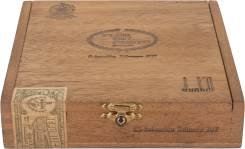
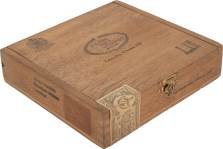
Among the more intriguing vitolas to emerge from Havana's storied cigar factories during a transformative decade stands the Flor del Punto Selección Número 307, a slender smoke that短短五年多的 production window has elevated it to considerable desirability among those who appreciate the nuanced heritage of Cuban tobacco craftsmanship. This particular offering represents a time capsule of manufacturing philosophy and blend character that differed markedly from the robust offerings dominating today's market.

The Historical Context
The mid-1970s found Cuba's tobacco industry at an interesting crossroads, navigating shifts in both domestic policy and international trade dynamics. It was within this environment that the Selección Número 307 first appeared on the market, representing the Flor del Punto brand's effort to cater to enthusiasts seeking refinement rather than intensity. The vitola would remain in continuous production until 1982, giving it roughly five to seven years of availability before being officially retired from the catalog.
Manufactured exclusively at the Carolinas facility, this particular smoke benefited from the factory's reputation for maintaining elevated standards throughout the production process. The discontinuation in 1982 marked the end of an era for this specific vitola, one that collectors now recognize as a relatively rare find in well-preserved condition.
Physical Specifications
The Selección Número 307 presents itself in a format that has become increasingly uncommon in contemporary Cuban cigar production. Its dimensions reveal a distinctly slender profile that was once far more typical of the Cuban portfolio than it is today:
- Ring Gauge: 26
- Length: 121 millimeters (4¾ inches)
- Official Weight: 2.94 grams
- Construction Method: Handmade
- Band Style: Standard band A
These measurements place the Selección Número 307 firmly in the category of thinner, more elegant vitolas. The relatively modest ring gauge suggests a smoking experience designed to highlight subtlety and complexity rather than delivering powerful, full-bodied intensity. The 121-millimeter length provides adequate time for the blend to unfold progressively, allowing the smoker to appreciate layers of flavor that might be overshadowed in thicker formats.
Packaging and Presentation
The selection número 307 was housed in semi boîte nature boxes containing 25 individual units. This packaging choice reflected practical considerations that remain relevant to collectors today. The semi boîte nature construction offered a middle ground between fully mechanical packaging and completely裸露的木盒 format, providing sufficient ventilation for gradual aging while maintaining adequate protection during transport and storage.
The Standard band A designation placed this vitola firmly within the established visual identity of the Flor del Punto line, utilizing the brand's traditional color scheme and typography. This consistency in branding helped establish immediate recognition among purchasers familiar with the brand's broader portfolio.
Smoking Characteristics and Collector Appeal
Given the specifications and historical context, the likely smoking profile of the Selección Número 307 would have emphasized delicacy and refinement. The moderate 2.94-gram weight suggests a fill level that produced a firm but yielding draw, avoiding the extremes of either overly tight or excessively open airflow that can compromise the smoking experience.
For modern collectors, these cigars represent increasingly scarce artifacts of a specific period in Cuban tobacco history. The combination of limited production duration, the historical significance of the era, and the distinctive vitola format creates a compelling proposition for those assembling comprehensive collections of Cuban cigar heritage. Well-preserved specimens command attention in auction contexts, though condition becomes paramount given the age of surviving examples.
The selection número 307 stands as a testament to an era when Cuban manufacturers produced a more diverse array of vitolas than what dominates today's market, offering enthusiasts insight into the creative approaches that characterized the industry's approach during the late transitional period.