
In the world of vintage Cuban cigars, Don Cándido occupies a quiet but fascinating niche. Though the brand vanished from production more than three decades ago, its modest presence still draws the curiosity of seasoned smokers and historians alike. The story of Don Cándido is tightly interwoven with the turbulent transformation of the Cuban cigar industry after 1959, making its limited releases a snapshot of a bygone era. For those who appreciate the craft of classic Habanos, a sealed box of Don Cándido is more than a smoke; it is a tangible piece of cultural heritage.
The Origins and Era of Don Cándido
Don Cándido emerged during a period when the Cuban cigar landscape was undergoing dramatic change. After the 1959 nationalization, many long‑standing private factories were consolidated under state control, and new brands were introduced to fill the gaps left by vanished names. Don Cándido was one of those newcomers, launched in the late 1960s as a mid‑tier offering aimed at everyday smokers who still demanded a taste of premium tobacco. Its relatively short lifespan—about fifteen years—means that the brand never achieved the widespread fame of Cohiba or Montecristo, but it carved out a niche that is now prized by collectors.
Band Design and Production Timeline
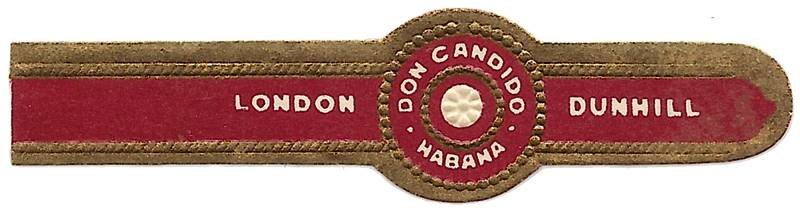
The hallmark of a Don Cándido cigar lies in its band, a design that bears the hallmark “Standard Band A” label used by the national cigar authority for a specific tier of production. The band features raised lettering and a subtle embossed finish, a visual cue that signals the brand’s standing within the market hierarchy. Production spanned from the late 1960s until 1982, covering roughly fifteen years of continuous output. This era coincided with the early post‑revolutionary reorganizations, before the later portfolio reshuffles that consolidated many smaller brands into larger, more recognizable lines.
Key Features of the Band
- Designation: “Standard Band A” – a classification that placed the brand in the middle tier of Cuban cigars.
- Finish: Raised relief lettering and a light embossed texture that catches the light.
- Color scheme: Classic red and gold, a palette often associated with premium Habanos of that era.
- Packaging: Original boxes were typically plain, with the band serving as the primary visual identifier.
Collectibility and Market Presence
For cigar historians and seasoned smokers alike, Don Cándido surfaces only sporadically in the resale market, where it commands attention from those seeking authentic post‑1959 artifacts. The combination of a limited production window and a distinct band makes each box a rare find. Collectors are drawn to the embossed bands as tangible evidence of the era’s manufacturing techniques, while the plain boxes offer a glimpse into the minimalist packaging philosophy of the time. In auctions and specialty shops, a sealed Don Cándido box can fetch prices that reflect both its scarcity and its historical significance.
- Rarity: Only about fifteen years of output, with no reissues after 1982.
- Authenticity: Original bands retain their raised texture, a mark of genuine production.
- Historical appeal: The brand captures a moment in Cuban cigar history after nationalization but before later consolidations.
- Investment potential: Prices have shown a steady upward trend as more collectors recognize the brand’s niche value.
Tips for Preserving and Displaying Don Cándido Cigars
For those lucky enough to acquire a box, proper care is essential to maintain both the cigars’ flavor and the integrity of the band. Humidity control is paramount; a stable relative humidity of 65‑70 % prevents the tobacco from drying out while keeping the embossed band from cracking. Temperature should be kept in the low 60s°F (≈16‑18 °C) to slow any potential degradation. When displaying, avoid direct sunlight, as UV exposure can fade the vivid red and gold colors. If you wish to showcase a single band, consider a sealed glass case that shields it from dust and handling.
- Storage