Among the pantheon of Cuban handmade cigars, the Diplomáticos No.5 stands as a testament to nearly half a century of consistent quality and cultural significance. This slender petit corona, affectionately referred to as the "Perlas" by those in the know, carved out its own niche in the hearts of smokers worldwide. Though production ceased over a decade ago, the legacy of this vitola continues to captivate collectors and purveyors of fine烟草制品 alike.

The Birth of an Icon
The year 1966 marked a pivotal moment for the Diplomáticos marque. It was then that the No.5 first rolled off the production lines of a prestigious Cuban cigar factory, beginning an extraordinary journey that would span 44 remarkable years. This release came during a period of significant expansion and evolution within Cuba's legendary cigar industry, and the No.5 emerged as part of the brand's core portfolio of regularly produced offerings.
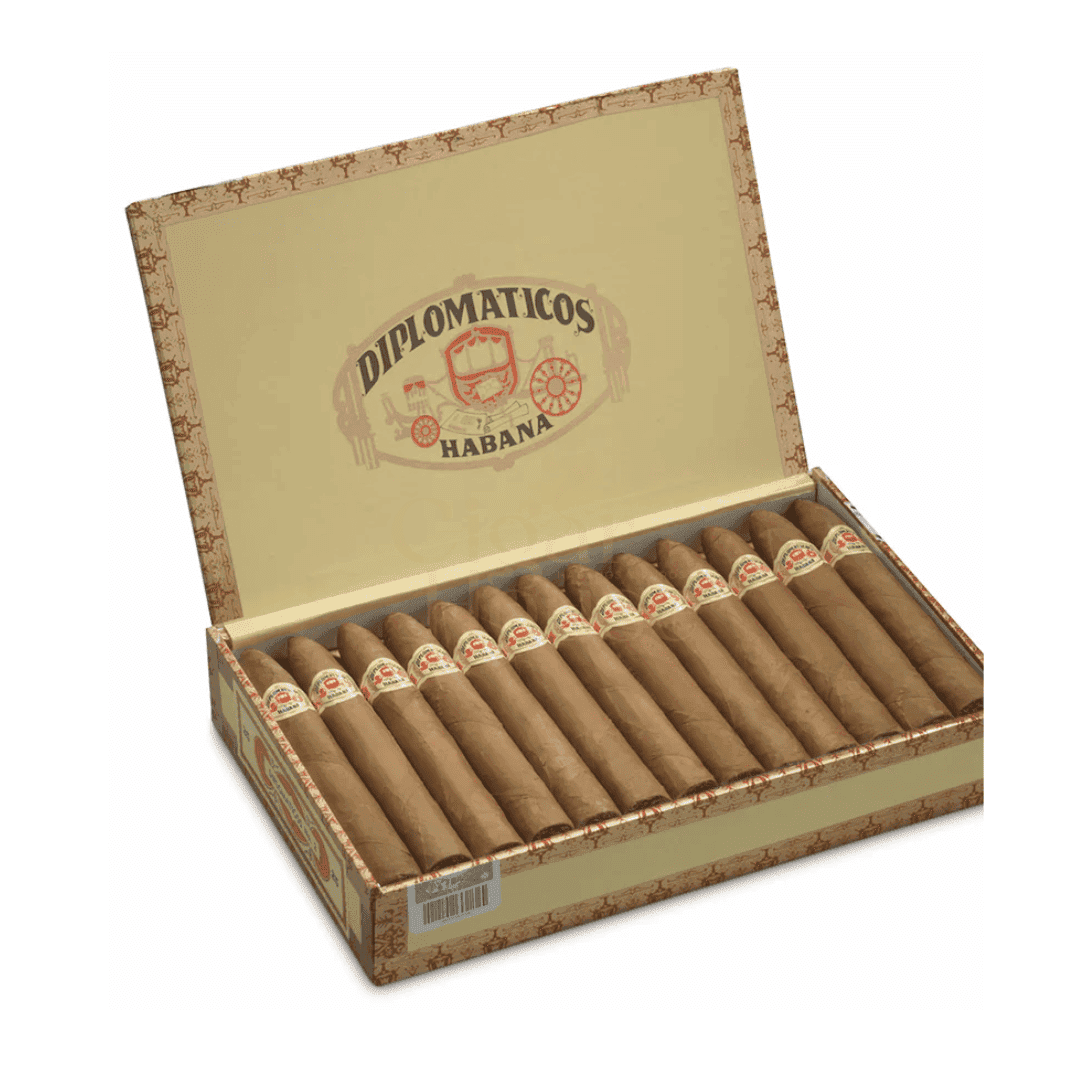
For the first dozen years of its existence, the No.5 graced humidors in semi boîte nature boxes—a distinctive packaging style that set it apart from many contemporaries. The brand maintained flexibility in presentation during these formative years, offering enthusiasts the choice between compact 10-cigar bundles and more substantial 25-cigar configurations. This packaging approach reflected the era's market dynamics and the varying needs of both casual smokers and dedicated aficionados.
Physical Characteristics and Construction
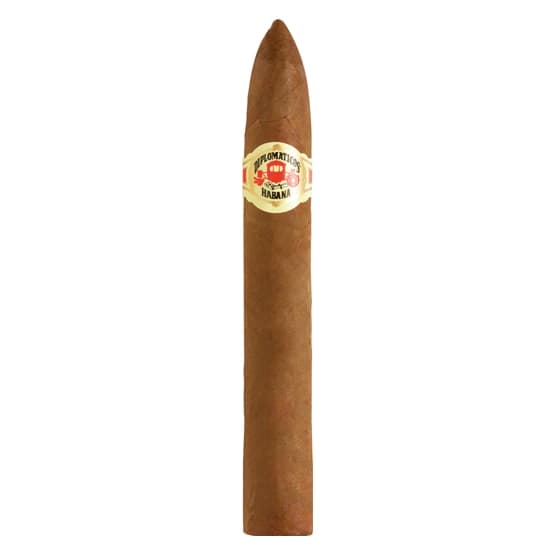
Measuring precisely 102 millimeters in length with a 40-ring gauge, the No.5 embodied the classic petit corona format that has long appealed to smokers seeking a shorter, more contemplative smoking experience. The official weight of 5.91 grams positioned it firmly within the lightweight category of Cuban cigars, making it an accessible option for those occasions when time or circumstance warranted a more compact smoke.
The construction remained consistently handmade throughout the vitola's production run, a hallmark of Cuban cigar craftsmanship that ensured each individual cigar met exacting standards. Adorned with the standard Diplomáticos band, the No.5 presented itself with understated elegance—a visual language that communicated quality without excessive ornamentation.
Packaging Evolution Through the Decades
- 1966-1970s: Semi boîte nature boxes in both 10-count and 25-count formats
- Late 1970s onward: Transition to dress box presentation containing 25 cigars
- 2010: Final discontinuation after 44 years of continuous production
The Transition Years
The late 1970s brought significant changes to the No.5's market presentation. As consumer preferences evolved and distribution strategies became more standardized, the decision was made to phase out the traditional semi boîte nature boxes in favor of dress boxes. This shift consolidated the packaging to a uniform 25-cigar format that would become the standard for the remainder of the cigar's commercial life. The dress box aesthetic, with its clean lines and protective qualities, served the brand well through the final three decades of production.
This packaging transition coincided with broader changes in the global cigar market, including shifts in export priorities and the emergence of new consumer demographics. Throughout these transformations, the No.5 maintained its position as a reliable, consistent choice for those seeking authentic Cuban tobacco in a manageable size.
Where Is the No.5 Today?
Since 2010, the Diplomáticos No.5 has officially joined the ranks of discontinued Cuban cigars. After an impressive 44-year production run, this beloved petit corona was quietly retired from Habanos S.A.'s regular portfolio. For current smokers, this discontinuation means that acquiring one of these cigars requires persistence, patience, and often a relationship with specialty retailers who may have remaining stock tucked away in their aging rooms.
The scarcity factor has naturally influenced the secondary market, where surviving examples command attention from collectors assembling comprehensive Cuban cigar collections. Yet beyond mere collectibility, the No.5 remains significant as a marker of a particular era in Cuban cigar manufacturing—a time capsule representing construction techniques, flavor profiles, and cultural contexts that existed before the modern era of Cuban cigar production.
For those fortunate enough to encounter an aged specimen, the No.5 offers a glimpse into what made Cuban cigars truly legendary throughout the twentieth century. Its story, spanning from the Cold War era through the digital age, ensures its place among the essential chapters of Cuban cigar heritage.