Among the most coveted treasures in the world of premium cigar collecting, the Davidoff 3000 stands as a remarkable artifact from an era when Swiss precision met Cuban craftsmanship. This slender, elegant smoke carries with it decades of history, representing a time when the Davidoff name was still inextricably linked to the vibrant tobacco fields of Cuba. For collectors and connoisseurs seeking to experience an authentic piece of cigar heritage, the 3000 offers something truly special: a tangible connection to a pivotal moment in cigar manufacturing history that can never be recreated in today's market.

A Brief Overview of the 3000
The Davidoff 3000 occupies a unique position in the annals of Cuban cigar production. Introduced during the early years of the 1970s, this particular vitola quickly established itself as a staple within Davidoff's Cuban portfolio. The cigar remained in continuous production for approximately two decades, gracing the humidors of enthusiasts who appreciated its refined character and consistent quality. Its journey came to an end in 1991, coinciding with one of the most significant shifts in the cigar industry: Davidoff's decision to relocate its manufacturing operations from Cuba to the Dominican Republic.
What makes the 3000 particularly fascinating is its place within this transitional period. As one of the final generations of cigars produced entirely under Cuban supervision for the Davidoff brand, the 3000 represents both an ending and a beginning. The specifications of this smoke reflect the meticulous standards that made the Davidoff name synonymous with excellence.
Technical Specifications
Measuring 178 millimeters in length with a ring gauge of 33, the 3000 presents itself as a delicate,细细长长的 perfecto that demands attention from those who appreciate finesse over power. The official weight of 7.07 grams places it firmly in the纤细 category, appealing to smokers who prefer a longer, more contemplative smoking experience. Each cigar was crafted entirely by hand, a testament to the skilled torcedors who devoted their expertise to producing these masterpieces at the Ninfas factory, one of Cuba's renowned producing establishments.
The presentation of the 3000 followed the traditional branding conventions of the era, featuring the Standard Band A that collectors immediately recognize as authentic to this production period. This banding serves as an important identifier for authenticity purposes, as counterfeit examples occasionally appear in the secondary market.
Packaging and Availability
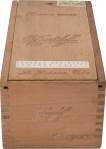
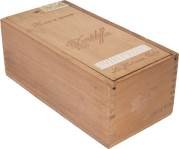
During its production years, the Davidoff 3000 reached consumers through two primary packaging formats designed to accommodate different purchasing preferences. Those wishing to explore the blend without committing to a larger acquisition could obtain the cardboard pack containing five cigars, an ideal option for sampling purposes. For the more devoted enthusiast, the traditional slide lid box housing 25 cigars provided the opportunity to acquire a proper quantity while ensuring optimal storage conditions.
Today, acquiring the 3000 requires navigating the collectibles market, as standard retail channels ceased carrying this item over three decades ago. The discontinuation in 1991 marked the end of an era, and no official mechanism exists for obtaining fresh examples. This scarcity has naturally driven interest among those who seek to add this piece to their collections.
The Collector's Perspective
The Davidoff 3000 has earned its reputation as a collector's dream through the convergence of several compelling factors. Its vintage status, combined with the prestigious Davidoff heritage and the historical significance of its Cuban origin, creates a trifecta of desirability that few cigars can match. Well-preserved specimens command attention in auction settings and specialty tobacco shops that cater to serious collectors.
What truly distinguishes the 3000 is its role as an irreplaceable artifact. Since Davidoff's departure from Cuba, no production line has recreated this specific blend or vitola. Smokers who encounter properly aged examples describe an experience that cannot be compared to modern productions, offering a window into how Cuban tobacco expressed itself through Swiss-influenced blending philosophy during a distinct historical period.