While modern aficionados often obsess over the nuances of fully hand-rolled puros, the rich history of Cuban tobacco is deeply intertwined with industrial production. The Bolívar Petit Coronas Especiales stands as a testament to this manufacturing heritage, offering a unique window into a time when automation was not seen as a compromise on quality, but rather as a reliable method for satisfying a global market. This specific vitola serves as a fascinating artifact from a transformative epoch in Havana’s export history, representing a bridge between the past and present of the island's cigar industry.

A Journey Through Production History
The narrative of the Petit Coronas Especiales begins well before the sweeping changes of the 1960s. Launched prior to the Cuban Revolution, this cigar established itself as a staple in the Bolívar portfolio during a time when machine-made vitolas were a standard fixture in brand lineups. Its tenure on the market was remarkably resilient; it remained in active production for decades, surviving the tumult of the Revolution and the subsequent restructuring of the industry.
However, every era must eventually come to a close. By the 1980s, the industry had begun to pivot decisively toward the prestige of handmade craftsmanship. Consequently, the Petit Coronas Especiales was phased out. Its discontinuation marked the end of an important chapter for the brand, signaling a shift in consumer expectations and the industry's focus on premium, hand-finished products. Despite its departure from shelves, its long production run serves as proof of its acceptance among smokers of the mid-20th century.
Technical Specifications and Dimensions
For the collector or historian seeking to identify this vintage smoke, the physical dimensions are distinct. Known internally by the factory designation "Eminentes," the cigar measures 132 mm (or 5¼ inches) in length with a ring gauge of 44. This size offers a classic format that fits comfortably in the hand, striking a balance between a robust duration and a comfortable girth. The official weight of the unit was recorded at 8.74 grams, suggesting a dense bunch that promised a consistent burn.
The Machine-Made Distinction
The most defining characteristic of this release was its construction. Unlike the handmade limited editions that dominate the modern luxury landscape, the Petit Coronas Especiales was produced using automated equipment. In the context of the mid-20th century, this method was not a sign of inferiority but of efficiency. It allowed manufacturers to maintain rigorous consistency across thousands of units, ensuring that the smoking experience remained uniform—a quality that hand-rolling can sometimes struggle to match in large volumes.
Packaging and Visual Presentation
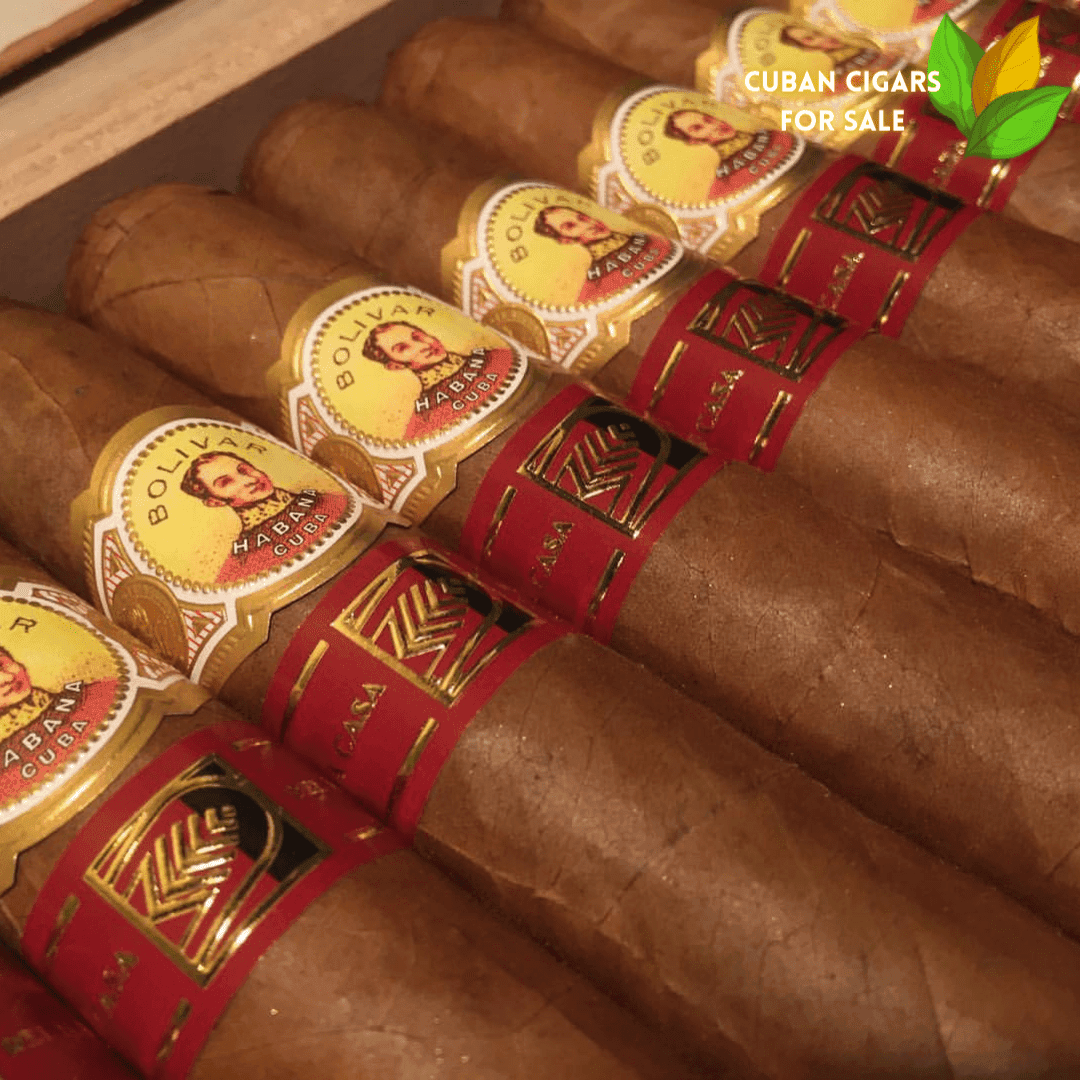
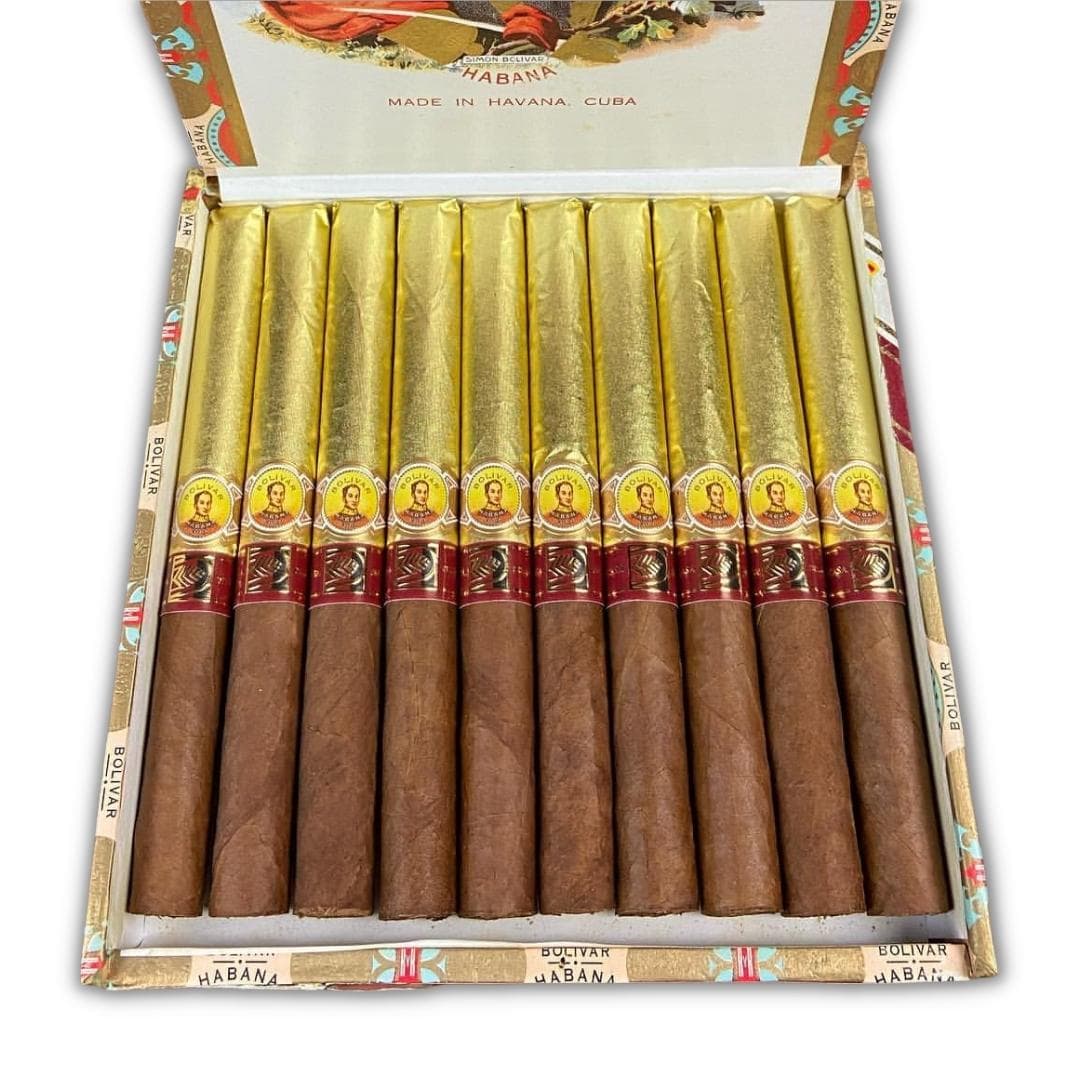
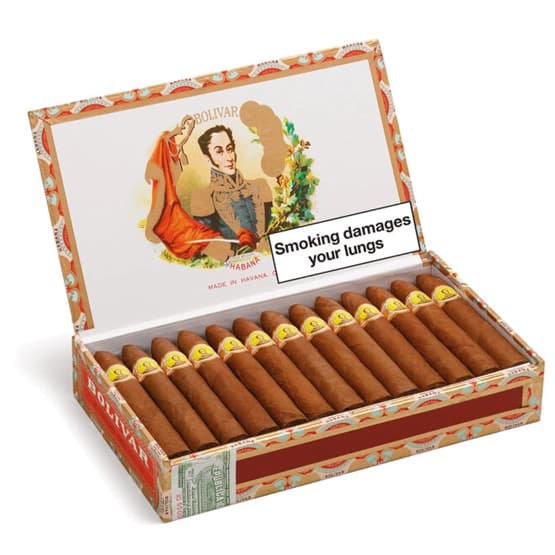
Visually, the cigar was dressed in the standard Bolívar livery, utilizing the brand's recognizable "Band A" design. This branding immediately signaled the cigar’s heritage and strength to the consumer. The presentation was practical for the era, housed in dress boxes containing 25 units. A key feature of its presentation was the individual wrapping of each cigar in cellophane. This was a practical consideration designed to preserve freshness and protect the wrapper leaves during transport and storage, a common practice for production cigars of that time.
The Modern Collector's Market
Since its disappearance from regular production in the 1980s, the Bolívar Petit Coronas Especiales has evolved from a daily smoke into a sought-after collector's item. Surviving boxes and individual sticks occasionally surface at specialized auctions, but they are increasingly rare. Because it is a machine-made vitola, it occupies a unique niche; it is often viewed differently than the handmade vintage treasures that command the highest prices.
Nevertheless, for students of Cuban cigar history, this vitola represents an important artifact. It captures a transitional period where the industry moved from industrial-scale output back toward artisanal craft. Owning a piece of this history allows collectors to experience a flavor profile and construction method that is no longer replicated in modern production lines.