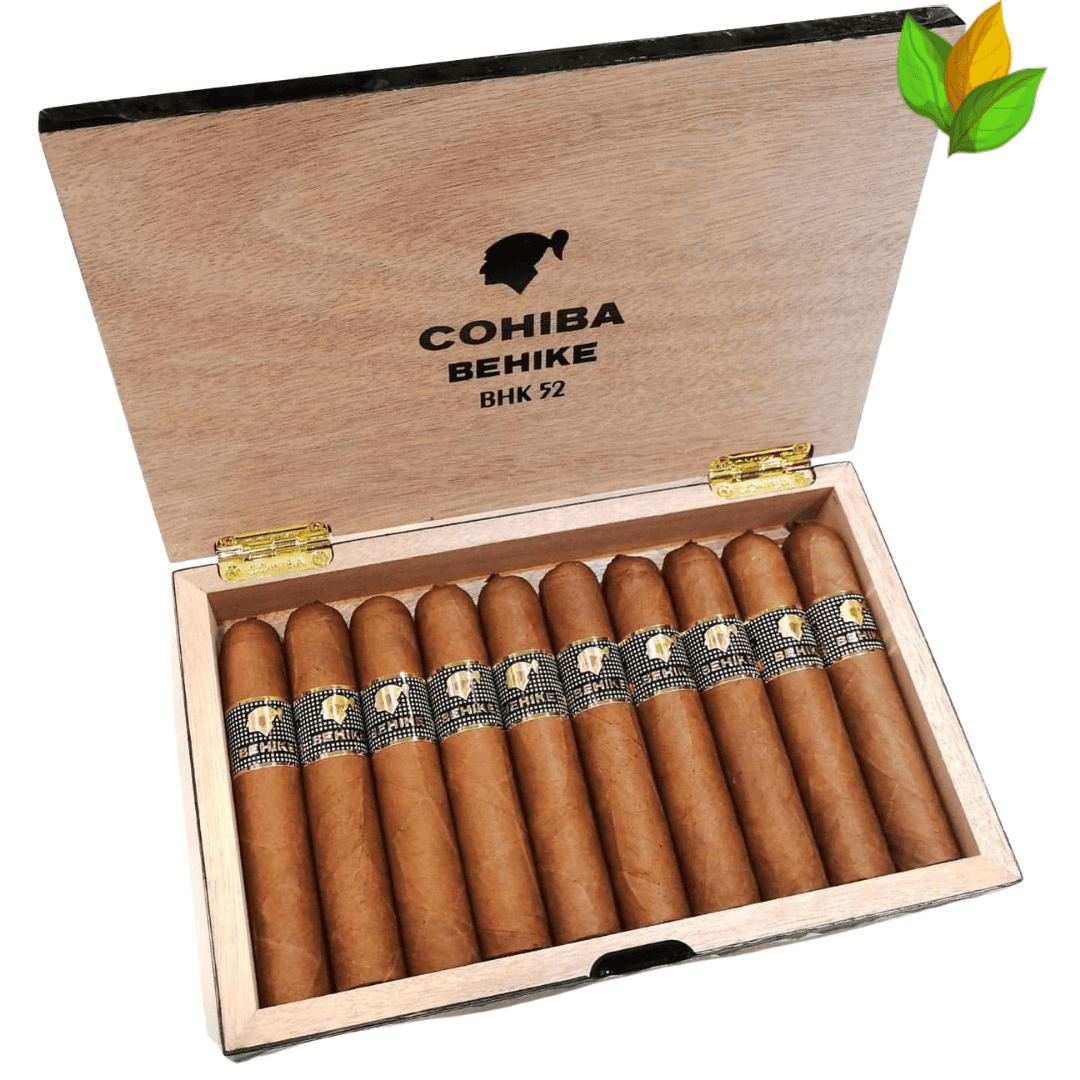
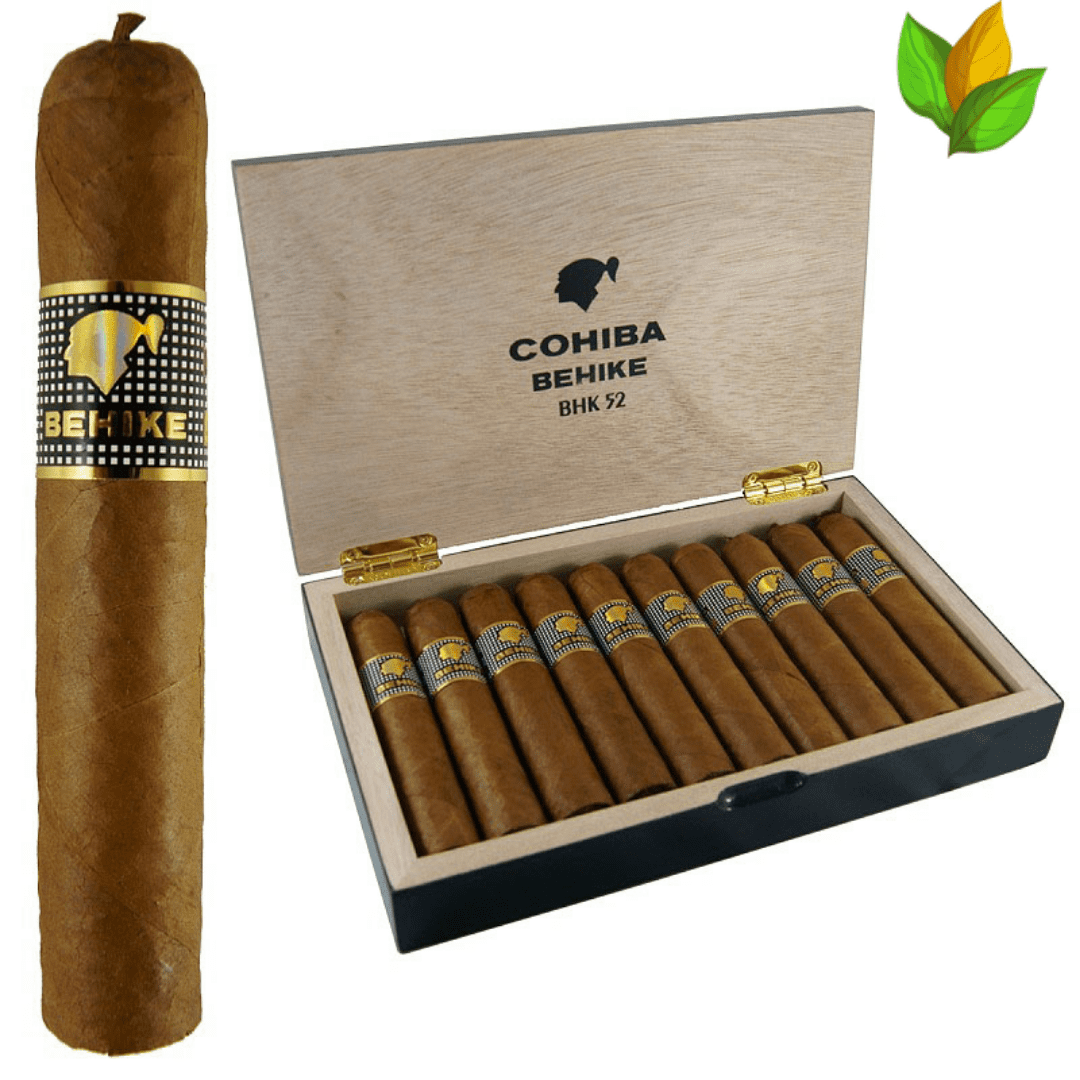

Description
The Ghost of El Laguito: A Sit-Down with the Cohiba Behike 52
I was sitting on the back porch of my family’s old ranch house last Tuesday, the kind of place where the wind whistles through the floorboards and the nearest neighbor is a three-mile hike away. The sun was doing that slow, orange sink into the horizon, casting long, tired shadows across the dirt. I was rooting through an old shoebox I’d pulled from the attic—mostly tax receipts and yellowed newspaper clippings—when I found it.
It was a Polaroid from 1988. My old man was leaning against his rusted-out Ford, squinting into the sun with a crooked grin and a cigar clamped between his teeth. He looked happy. He looked like he didn’t have a care in the world, which I know for a fact wasn’t true back then. Looking at that photo, I felt a sharp, bittersweet pang in my chest. Time is a thief, you know? It steals the moments but leaves you with the ghosts of smells and tastes. I remembered the scent of his tobacco—heavy, sweet, and honest.
I looked down at the humidor I’d brought out with me. I’d been saving one specific stick for a “special occasion,” but looking at that photo, I realized that “special” is just a polite way of saying “later,” and later isn’t promised to any of us. I reached in and pulled out the heavy, oil-slicked body of a cigar that carries more weight in its name than most brands do in their entire catalog.
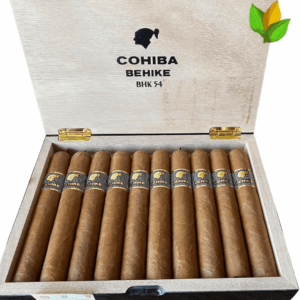
That smoke? The Cohiba Behike 52.
The Specs
| Feature | Details |
|---|---|
| Product Name | Cohiba Behike 52 (BHK 52) |
| Vitola | Laguito No. 4 (Petit Robusto) |
| Length | 4.75 Inches (119 mm) |
| Ring Gauge | 52 |
| Origin | Cuba (El Laguito Factory) |
| Wrapper | Cuban Vuelta Abajo (Colorado) |
| Binder | Cuban Vuelta Abajo |
| Filler | Cuban Vuelta Abajo (including Medio Tiempo) |
| Strength | Medium-Full |
The Construction: A Handshake from Havana
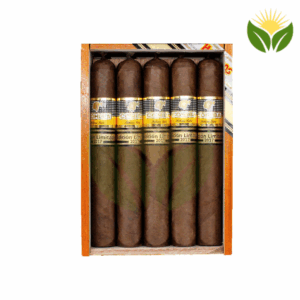
When you hold a BHK 52, the first thing you notice isn’t the gold-embossed hologram band—though that’s a trip to look at—it’s the weight. It feels substantial. It doesn’t feel like a bundle of leaves; it feels like a solid piece of craftsmanship. The wrapper is a gorgeous Colorado shade, a reddish-brown that reminds me of a well-oiled baseball glove. It’s smooth, almost buttery to the touch, with veins so fine they’re practically invisible.
I spent a good few minutes just turning it over in my fingers. The pigtail cap—that little twist of tobacco at the head—is a nod to the old-school rollers at the El Laguito factory. It’s a signature, a little “chef’s kiss” from the person who spent their life learning how to bunch leaves just right.
The pre-light draw was exactly what I wanted. I clipped the cap—carefully, because you don’t manhandle a cigar like this—and took a cold pull. It tasted like damp earth and old hay, with a tiny hint of something sweet, like dried raisins. The resistance was spot on. Not too loose, not like sucking air through a straw, but with just enough tension to let you know it was packed with high-quality filler.
The First Third: The Awakening
I toasted the foot with a soft flame, taking my time. You don’t want to scorch this tobacco; you want to invite it to burn. The first few puffs were a wake-up call. I gotta say, the spice hit me sooner than I expected. It wasn’t a stinging pepper, but a rich, warm tingle that coated the back of my throat.
As I sat there on the porch, watching the dust motes dance in the fading light, the BHK 52 started to open up. That initial spice settled into a deep, leathery core. It felt “thick.” That’s the only way I can describe the smoke—it has a texture to it. You can almost chew on it. There’s a sweet spice underneath the leather, something like nutmeg or cinnamon, but it stays grounded. It’s a confident start. It doesn’t scream for your attention; it just commands it.
The Second Third: The Sweet Spot
About twenty minutes in, the cigar hit its stride. This is where the magic of that Medio Tiempo leaf comes into play. If you don’t know, those are the two leaves at the very top of the tobacco plant. They get the most sun, they grow the slowest, and they pack a punch of flavor that the lower leaves just can’t touch.
The profile shifted from that rugged leather into something much more refined. I started picking up notes of creamy coffee—like a latte with way too much foam—and a distinct cedar woodiness. But the real kicker was the vanilla. It was subtle, hovering in the background, rounding out the edges of the smoke.
The burn was dead even. I didn’t have to touch it up once, even with the slight breeze blowing across the ranch. The ash was a light grey, holding on like it was glued to the foot. I felt myself relaxing into the chair, the bittersweet mood from the photo fading into a sort of quiet contentment. This is what a good cigar does—it slows the world down just enough for you to actually live in it for a second.
The Final Third: The Deep End
As I got down to the last couple of inches, the BHK 52 decided to show its teeth. The strength picked up, moving from a comfortable medium to a solid medium-to-full. The creaminess took a backseat, and the earthiness came roaring back. It was like the smell of the ranch after a heavy rain—rich, dark, and primal.
The spice returned, too, but it was deeper now, more like black pepper and charred oak. Even as it got shorter and hotter, it never got bitter. That’s the mark of a well-aged Cuban. It stayed smooth right down to the point where I was burning my fingertips. I didn’t want to let it go. I was sitting there, staring at that old Polaroid of my dad, and I realized that if he were here, he wouldn’t have said a word. He would’ve just reached out, taken a puff, and nodded. That’s the kind of cigar this is. It’s a “nodding” cigar.
Pairing: What to Sip
I kept it simple. I had a thermos of black coffee—strong, no sugar. The bitterness of the coffee cut through the creaminess of the second third perfectly. If I were doing this late at night, I’d probably reach for a dark, aged rum—something with enough sweetness to play off the spicy leather notes. A heavy bourbon would work too, but you’d want one that isn’t too high-proof, or you’ll drown out the nuances of the tobacco. You want a partner for this cigar, not a competitor.
The Value/Usage: Who is this for?
Look, let’s be real. This isn’t an “everyday” smoke unless you’re winning the lottery on a weekly basis. It’s expensive, it’s hard to find, and it’s surrounded by a lot of noise. But is it just hype? No.
This is for the person who wants to mark a moment. It’s for the guy sitting on a porch thinking about his old man. It’s for the celebration of a big win or the quiet reflection after a long journey. It’s a connoisseur’s stick, not because it’s fancy, but because the complexity of the flavor requires you to actually pay attention. If you’re going to smoke this while distracted, you’re wasting your money.
The Verdict
I’ve smoked a lot of cigars in my time. Some were forgettable, some were downright bad, and a few were great. The Cohiba Behike 52 sits in a different category. It’s a cohesive experience from the pigtail to the nub.
It’s got the history—the Taino name, the El Laguito pedigree, the rarity of the leaves—but none of that matters once you light it. What matters is the way it makes you feel. Sitting there on that creaky ranch porch, the BHK 52 felt like the perfect companion for a bittersweet afternoon. It’s consistent, it’s rich, and it’s got a soul.
If you can find one, and if you have a reason to sit still for forty-five minutes, buy it. Don’t wait for a “special” day. Just find a porch, find a memory, and let the smoke do the talking.
Final Thought: Solid. Absolutely solid. It’s the kind of experience that reminds you why you started smoking cigars in the first place. It’s not about the status; it’s about the story in the leaves.
I put the nub out in a ceramic tray, tucked the Polaroid back into the shoebox, and watched the last bit of smoke drift away into the Texas night. I think my dad would have approved.